
Career Day
A therapist, a chef, and a librarian walk into a classroom.

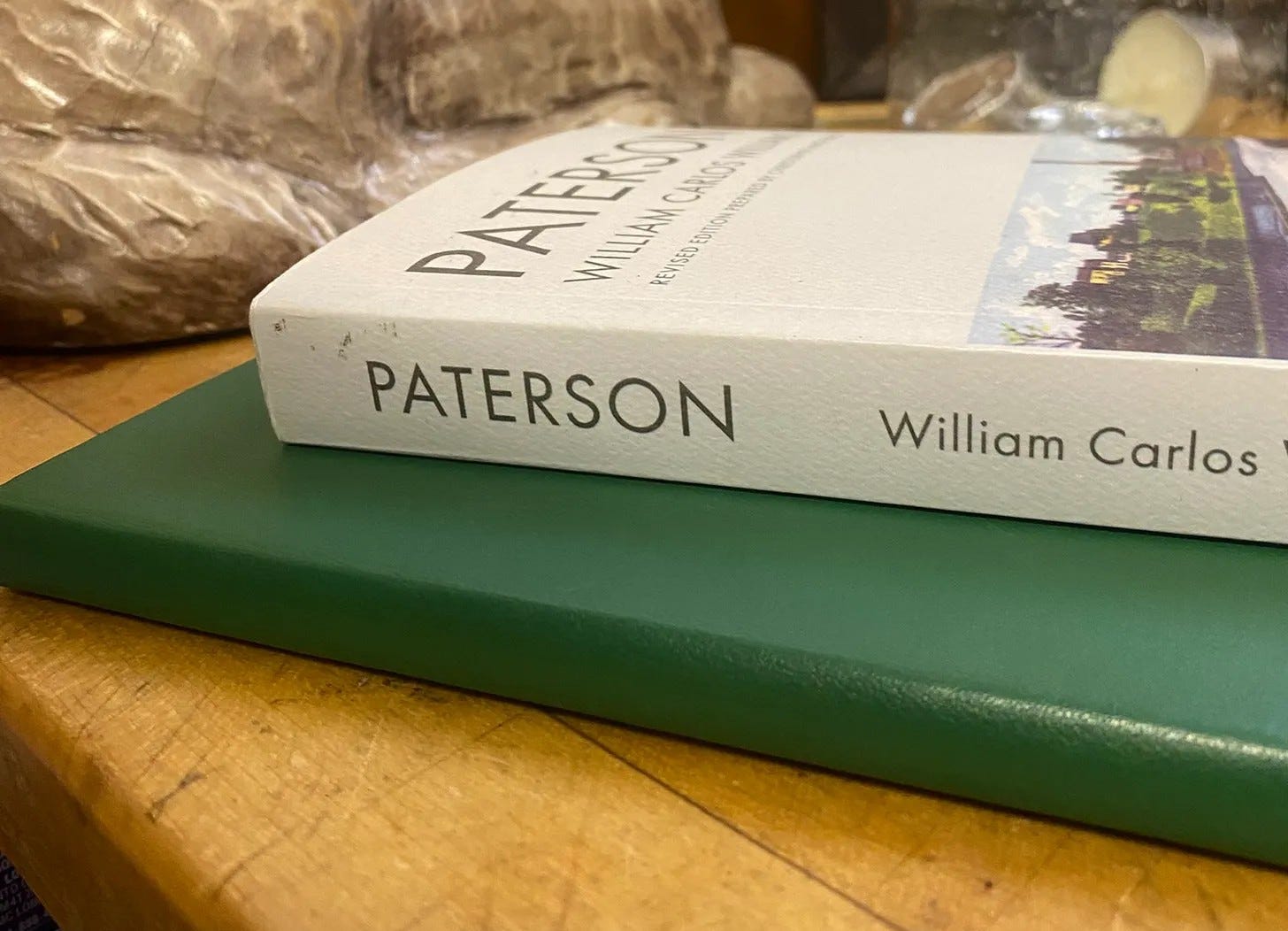
I’m back at the poetry grindstone these past couple of weeks (ie. reading Paterson in a camping chair alone on a Wednesday afternoon) which means my family is daily trying to figure out how to ask me, very gently, which of my two jobs I’m going to today, because this is most definitely work.
A couple months ago, Jim’s teacher messaged me on Instagram to ask if I would “film a short video about my career” for their unit on Community Helpers and my first thought was that she wanted me to read a poem, or worse, provide some explanation of poetry and what it does.
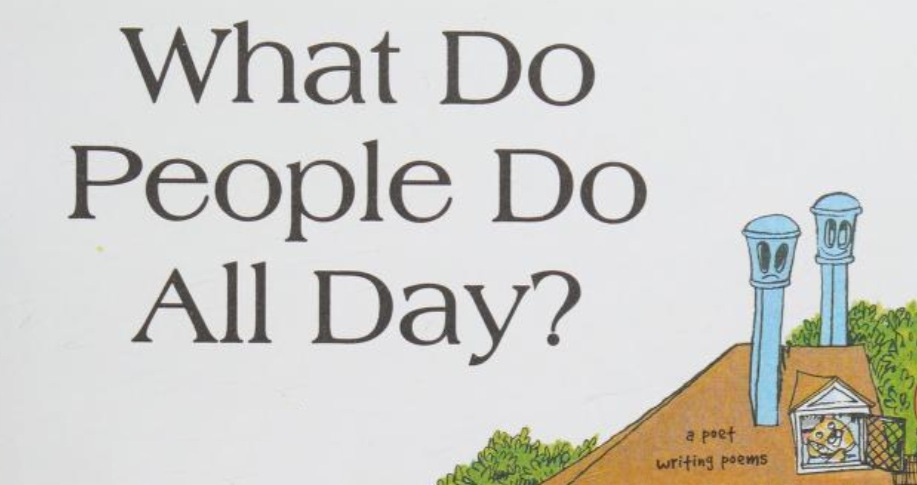
I tried to picture the writer character in What Do People Do All Day?, what animal she might be and kept coming up with: rat. Turns out he’s one of Eliot’s cats (Ts…tss…tss), up in the attic staring out the window.
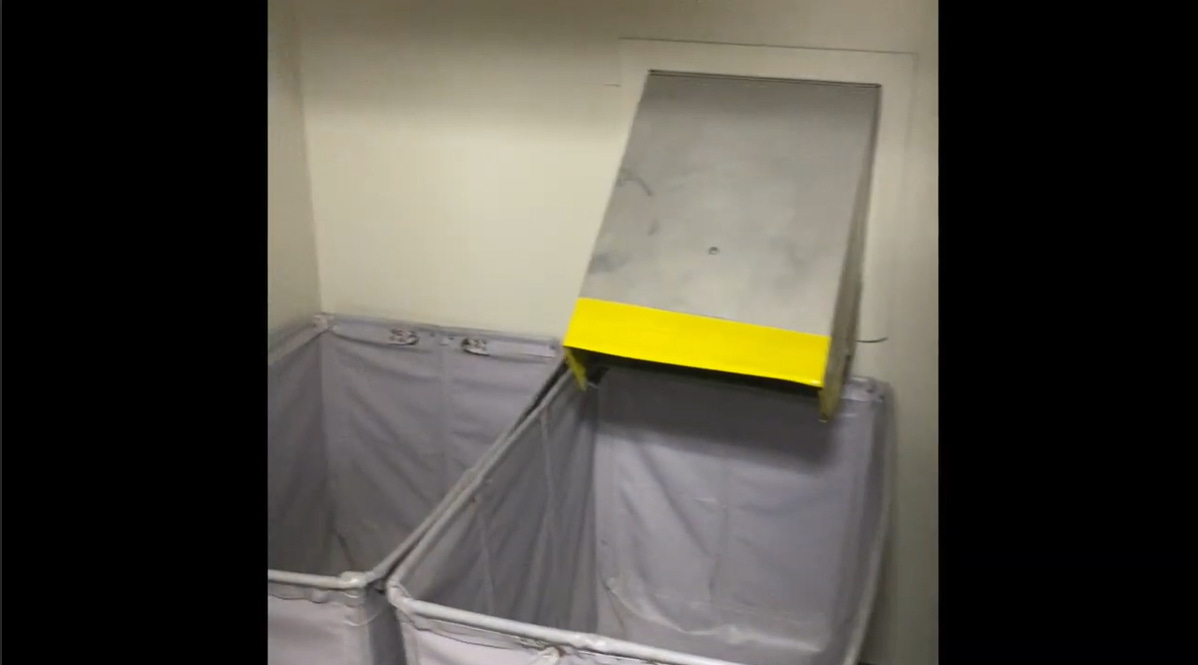
One of the other dads is a therapist and came in to talk to the kids about the importance of smelling the flowers and blowing out candles (intrusive thoughts?). A chef talked about food production, showed pictures of his livestock and brought in fresh baked goods. Meanwhile, I uploaded a seven-minute video to Google Drive featuring such highlights as me digging through my bag to find my swipe badge, the interior of the branch book drop, a carpet I scrubbed literal shit out of, and other intricacies of maintaining aging civic infrastructure. Apologies to the healthcare administrators, freelance photographers and parents with abstruse or decidedly unhelpful professions for their omission.
Watching the video back, I worried I didn’t explain enough about my day-to-day, nevermind actually say the words “Community” or “Helper,” but Jim told me the part the kids all liked best was the ten seconds when I walked past the branch Lego bins.
In a similar vein, a friend of my dad, who had been away from his family, working as support staff for an NHL team, went to the parent-teacher interview and learned that his son’s class had voted which parent had the best job—the result: a tie between him and the pizza delivery man. Give the kids what they want, I suppose.
My boys are really quite sweet about it all. The youngest seems to kind of understand that I am going off to “work on my book,” and Jim has his own questions. The morning after I was out at someone else’s launch event he asked me, “What book did you read from last night?”
I’ve made another shift at work, starting a contract in the Local History and Archives department, which feels a bit belated given my previous book, but sometimes life takes a minute to catch up I suppose. That and I’m a slow thinker.
I’m all trained up after a couple weeks and have been doing some personal research to get an understanding of the collection. I started by looking up some cheery facts about my house, for instance, in ‘42 someone broke in by inserting an ice pick through the screen door, and in ‘64, a 13-year-old boy who lived there drowned in Lake Erie after suffering a cramp while swimming. Local history is not always (usually?) uplifting.
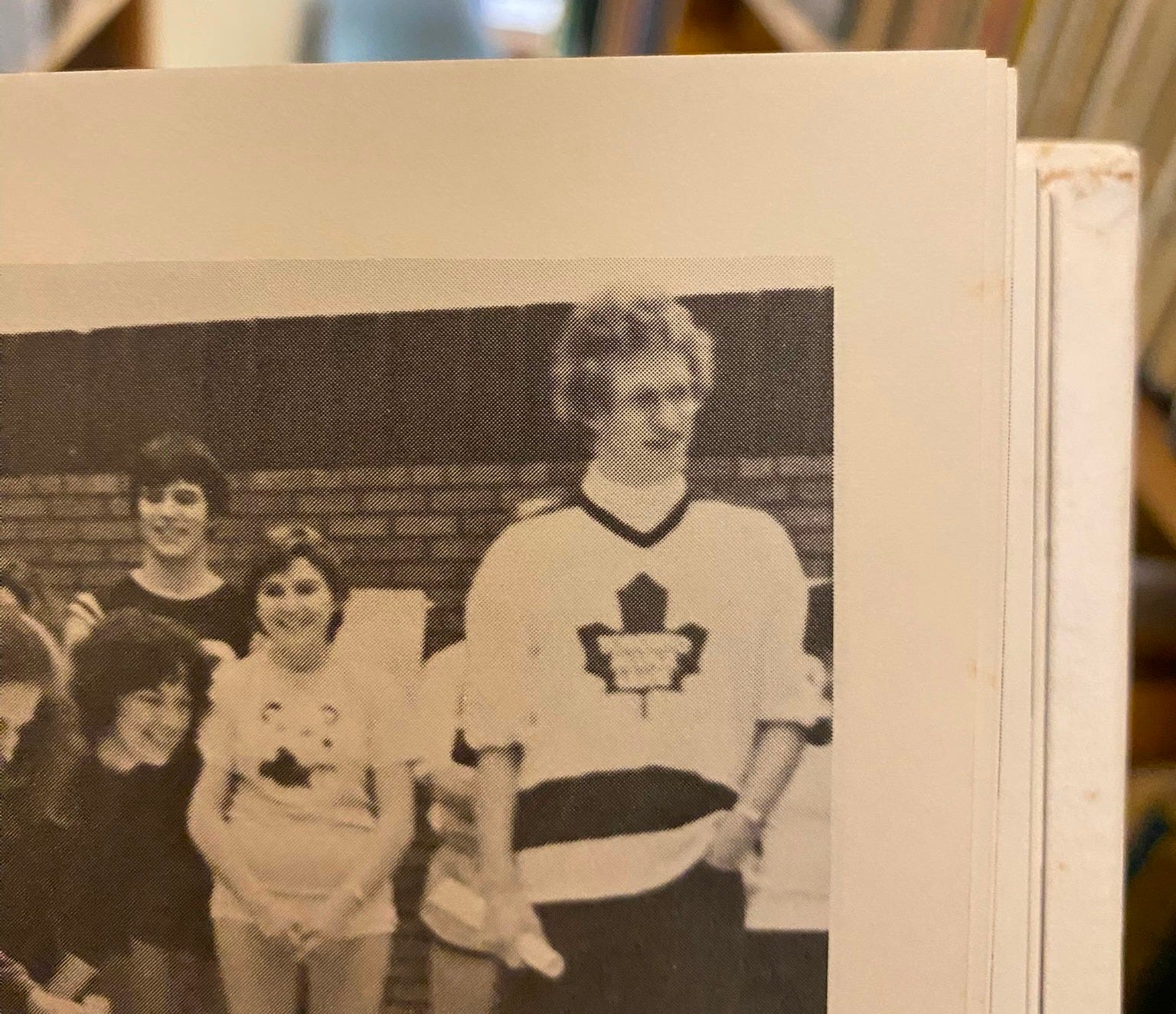
On a slightly less dour note, I also found a photo of my uncle in a Leafs jersey, much to the delight of my oldest who is dealing with the annual spring heartbreak and asking good questions like, “How come you can tie in soccer and not in hockey?” The North American mind cannot comprehend…
With this flip from spring to summer, school to vacation, library to library&poetry, hockey to soccer, the transitions are revealing. Like watching soccer (or PWHL) makes the particularities of NHL culture so apparent. Or put more eloquently, via Luke Hathaway:
I’m interested in the fact that in order to perceive change, we need the backdrop of constancy. Here it is, June again, and I’m struck by how radically different my life is right now than it was last June—and I see that because it’s June again. Repetition and variation. I find variation in repetition deeply beautiful: the imperfect pattern.
Speaking of rebirth, I finished my nearly year-long reading of My Struggle back in February and am free of the bonds of Knausgaard-dom (for now), so on to other, thinner books.
Some recent hits include Louise Gluck’s two books of nonfiction: Proofs & Theories and American Originality. Like other great critics, she sees so clearly what the poets under her consideration are after and is able to distill their project so clearly and directly. Even when she is being complimentary, she is a balm for much of the non-evaluative fluff that gets called reviewing. And when she is not being so complimentary, look out. Amidst all that clear-eyed evaluating she’ll also drop gems like this one from Proofs & Theories:
“The voice that never existed can issue only from the life that never existed, a life experienced (whether it be adventurous or hermetic) wholly and without sentimental simplification, the enduring general deriving continually from the accepted individual life.”
I loved Cam Scott’s new Manor’s Ransom which is a wild ride. I’m amazed that Cam can be so principled, a frighteningly astute and devoted political thinker, and yet so attuned to the music here, the book being a real pleasure to read. My favourite sections are the prose poem blocks which are full of consonance and slant rhyme so they clank along like a shopping cart full of scrap metal:
“A tin boat overturned beneath barbed wire, abandoned no-/ where near the water. Looking for a softer seltzer on the kitchen island,/ finding only opened cans.”
Also, I read his line “When someone says they split their time, they’re either rich or childless” and knew it was one that would worm its way into my brain for a long time.
Now that I’m reading novels again, I devoured Miranda July’s delightfully bizarre, totally unrepressed and hilarious All Fours.
Isaac Jarnot’s Four Lectures was incredible. I’d listened to and really enjoyed the recordings, and the book is also wonderful. Stories of sneaking an unpublished Robert Duncan manuscript out of the archives, which of course appealed, and other firsthand accounts of American poetry told with humour and the perfect mix of and learnedness and humility. Chapter 3 is titled “Abandon the Creeping Meatball: an Anarcho-Spiritual Treatise.” Say no more.
Lastly, a friend leant me Stephanie Burt’s Super Gay Poems: LGBTQIA+ Poetry After Stonewall and, while I found some of the essays a bit overly explanatory, it’s a concise and accessible introduction to (mostly) North American queer poetry including some old favourites (Schuyler, Hacker, bissett, CAConrad) and some new (to me) including Paul Monette, whose “Brother of the Mount of Olives” astounded me for its way with detail and gentle subtext:
...into the library its great vellum folios
solid as tombstones nobody copying out
or illuminating today unless perhaps
all of that has died and there’s a Xerox
glowing green in the abbot’s study...
Thanks for sticking around this long. Given all the school talk above, here’s a “making lunch” poem for the road:
Honk If You Can Read This

All these poets

penning odes to their

illiterate offspring—

I’ll admit I’ve

misused apostrophe

disguised as direct address

feigned correspondence with

if not the unborn

then the newly birthed.


These days if I

encourage Jim to sound

it out, he inevitably

reminds me I CAN’T READ

and yet still insists

on a lunchbox note which

he carries to his classroom

each morning and

home again to ask me

what it was I said.
Oh I enjoyed this so much, as always