
I Will Yell Quietly
Preschool, Preseason, Magic Johnson, Michael Jackson, Richard Siken, Anne Carson

The boys are deep into animal facts right now and it’s interesting to see them eclipse Al and I in a given area, not that that’s particularly difficult to do (outside of maybe Canadian Premier League soccer or public library software). Louis, in particular, has become quite the birder, and while my mother attempts to endear him to the more pleasant species—the nuthatch, the chickadee, the pileated woodpecker—he insists that he likes is a blackbird, a grackle, a crow. His Halloween costume remains a subject of much discussion, even two days out, but at one point he floated being a hybrid of Queen Elsa and a ruffed grouse.
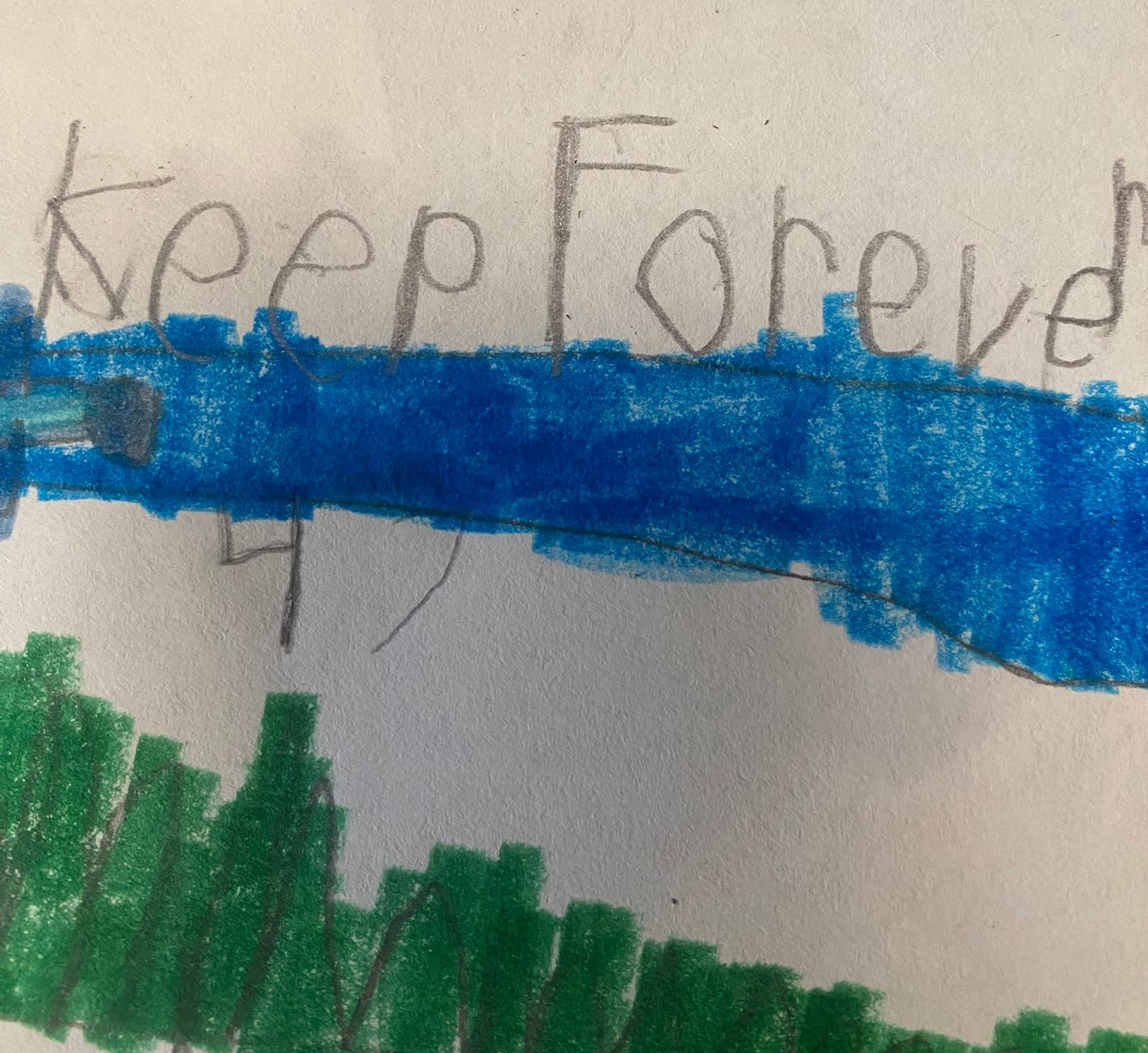
Last week I was talking to Gary Barwin, who is helping prepare Paul Dutton’s archive, and he was saying how amazing it is to be in a house surrounded by art and books and media, to see the physical traces of a life spent making literature and music. It made me wonder what my own house looks like from the outside. Aside from plastic toys, our place is perhaps unsurprisingly covered in books. But it is increasingly a very artistic/crafty house. Despite my efforts to keep at least one side of the dining room table reserved solely for dining, the ooze of drawings and painting and play dough continues its advance. At a loss for what to do with their respective oeuvres, and reaching a point where I was being served targeted advertisements for children’s artwork digitization, Al has started pulping the various 8.5x11” sheets which have been graced with a single line of magic marker and making her own paper with them.
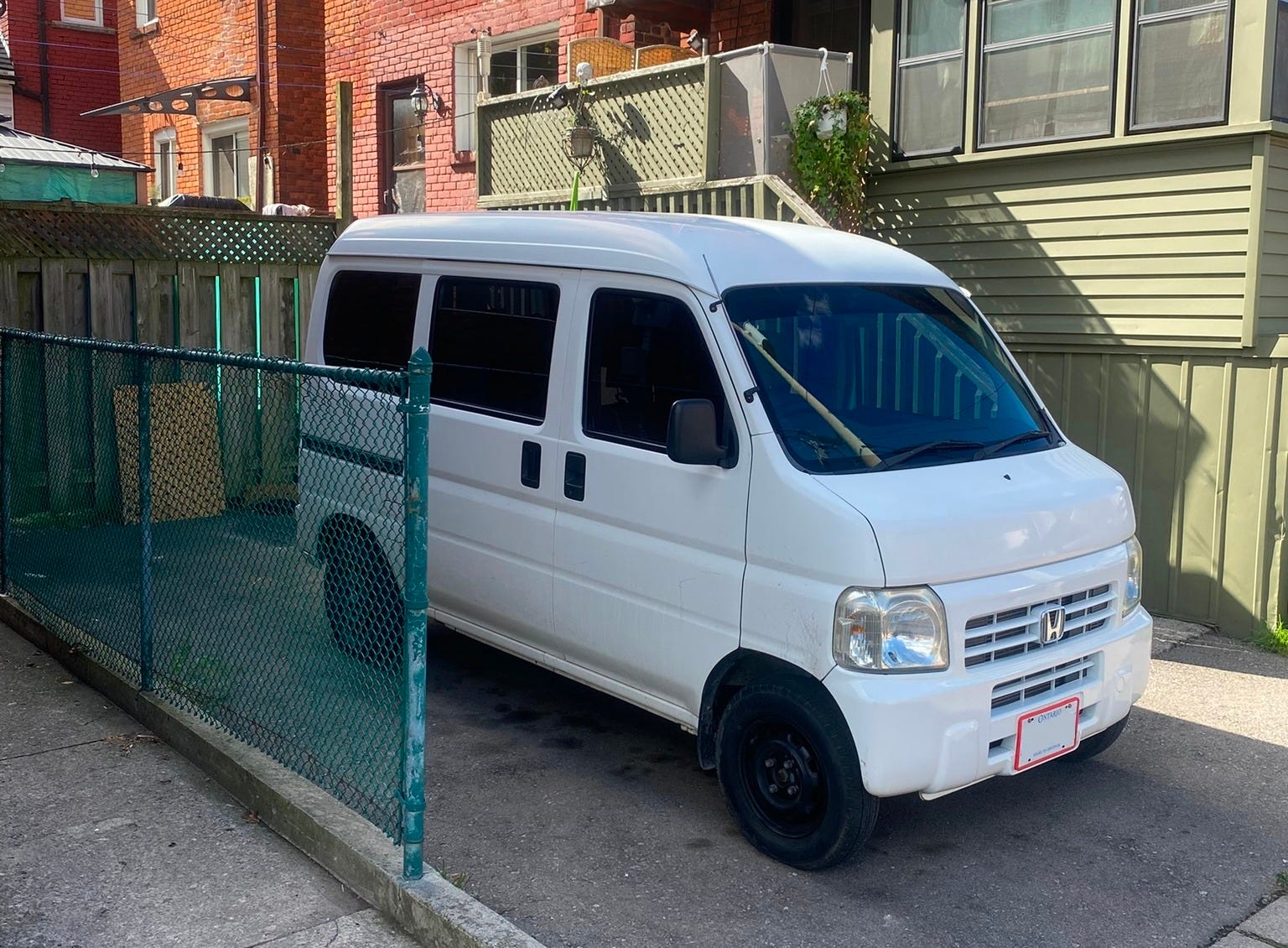
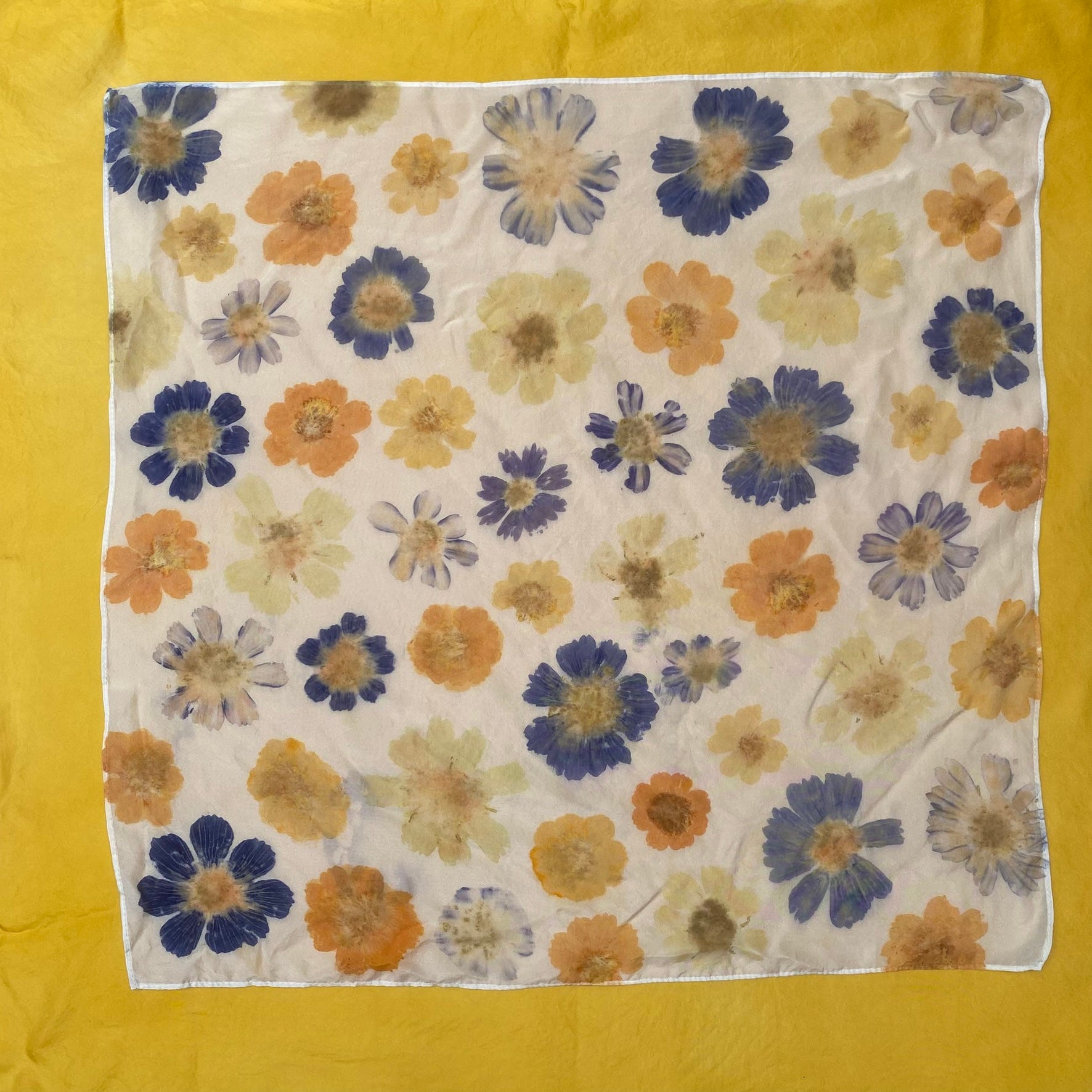
The house is also increasingly suffused with Al’s natural dyeing materials. As much as I hate eating anywhere near the smell of playdough, it has been really invigorating to live in a house so full of creativity, to see Al come into her own practice so assuredly, but also to watch the boys embrace their artistic abilities, even if it means I have some days sketched out three Teenage Mutant Ninja Turtles before 7am. It has also been quite funny, after years of going undercover as a poet, to have to explain a bit of her process to strangers, like when Louis and I purchased exactly 25” of copper pipe from the local Home Hardware and I couldn’t really explain why the diameter of the pipe didn’t matter or exactly what Al was going to use it for. Mostly, these things just feel like life with my strange little crew, that is until I’m offering a friend a ride home from a reading and realize there are multiple cherry branches in the tailgate, the cupholders are full of acorns, and there’s a bucket of unpeeled walnuts in the footwell.
We’ve been starting to batten down the hatches in preparation for winter, including finally deciding to insulate the roof of our front porch/floor of our bedroom after three winters of frosty sleeping. Jim seems to have picked up on all the repair talk as when I told him that Al and I were planning to go out for dinner he asked “Will you and mom talk about the basement when you go out?”
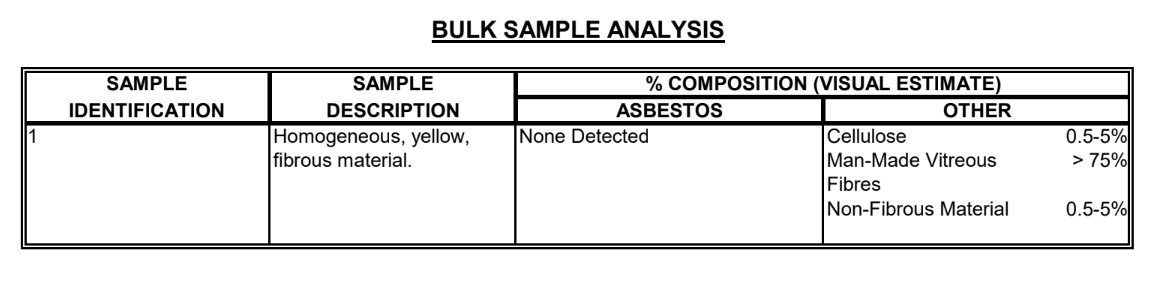
As part of our preparations, two weeks ago I had the strange experience of being wordlessly buzzed into a foyer that housed only a glass elevator, riding up to the floor above the York Boulevard Starbucks, and then passing a double Ziplocked bag of yellow insulation, which I pried out from behind the tongue and groove paneling with a flathead screwdriver, and handing it over to the lab’s receptionist.
At work, I’ve wrapped up my time as an Archival Clerk and have been gradually evolving into an Archival Technician. I’ve been enjoying all things RAD (Rules of Archival Description) and accessioning some of our more recent donations. From the service desk in the Local History and Archives reading room, you can see half of the Coppley building and it’s been interesting, over the course of the summer, to watch it get a facelift. After decades of inactivity, it has been getting sandblasted, power washed, angle grinded as well as being improved with a tool that made my whole body feel like it was being hit with a dental drill when I walked by. One day in particular, when the work was first beginning, there was such colourful smoke wafting out the missing windows that not one but two library workers called the fire department on the contractors. Right now you can see all the way through building to Vine St. a block north. Nothing, nothing, then all at once, some action. Kind of like writing poems. “I wait until the poems seem to be addressed not to ‘Occupant’ but to ‘William Meredith.’ And it doesn’t happen a lot.”
One of the many things I love about library workers is that their frequent interactions with various segments of the public often mean that they have some great stories (and, of course, a keen respect for confidentiality). In our team chat the other day, someone noted that a patron had come in looking for a nonexistent Tai Chi program. Staff Member A posted: “Years ago, before the pandemic, a group met once a week on the fourth floor for an hour of Tai Chi,” to which Staff Member B replied: “There used to be a lovely man who sat on the fourth floor everyday. One day he fell asleep reading and when he woke up he was surrounded by the seniors doing tai chi and he told me he wasn’t sure if it was a dream.” Sometimes it’s a workplace like any other, but every once in a while, you can get a glimpse of the other side.
[I sent this story to Gary because it sounded like something wired directly from his brain and he wrote and recorded a poem about it (with original musical accompaniment) in the time it takes me to turn on my laptop.]
Perhaps my most impactful read in the last few months was Gillian White’s Lyric Shame which examines, as the title might suggest, the persistent sentiment that lyric, I-focused poetry “in which ‘experience is digested for its moral content’” is not only shameful, but politically retrograde in light of the emergence of various avant-garde movements, particularly language poetry. It’s an excellent, complicating read that challenged my thinking in many useful ways, and wasn’t too dense for someone that tends to shy away from poetics/theory. It has also been driving me back to Bernadette Mayer who I think I will likely pull an epigraph from for my next collection: “Doesn’t everybody know everything or not, please let me know,/ isn’t the truth always the same…” White also also made me grateful, in some ways, for not having done an MFA in poetry and my lack of awareness of the traditional breakdowns between the various competing schools, that, for quite some time, I didn’t realize it’s a bit strange to like both Susan Howe and Louise Glück, Anne Carson and Alice Notley.
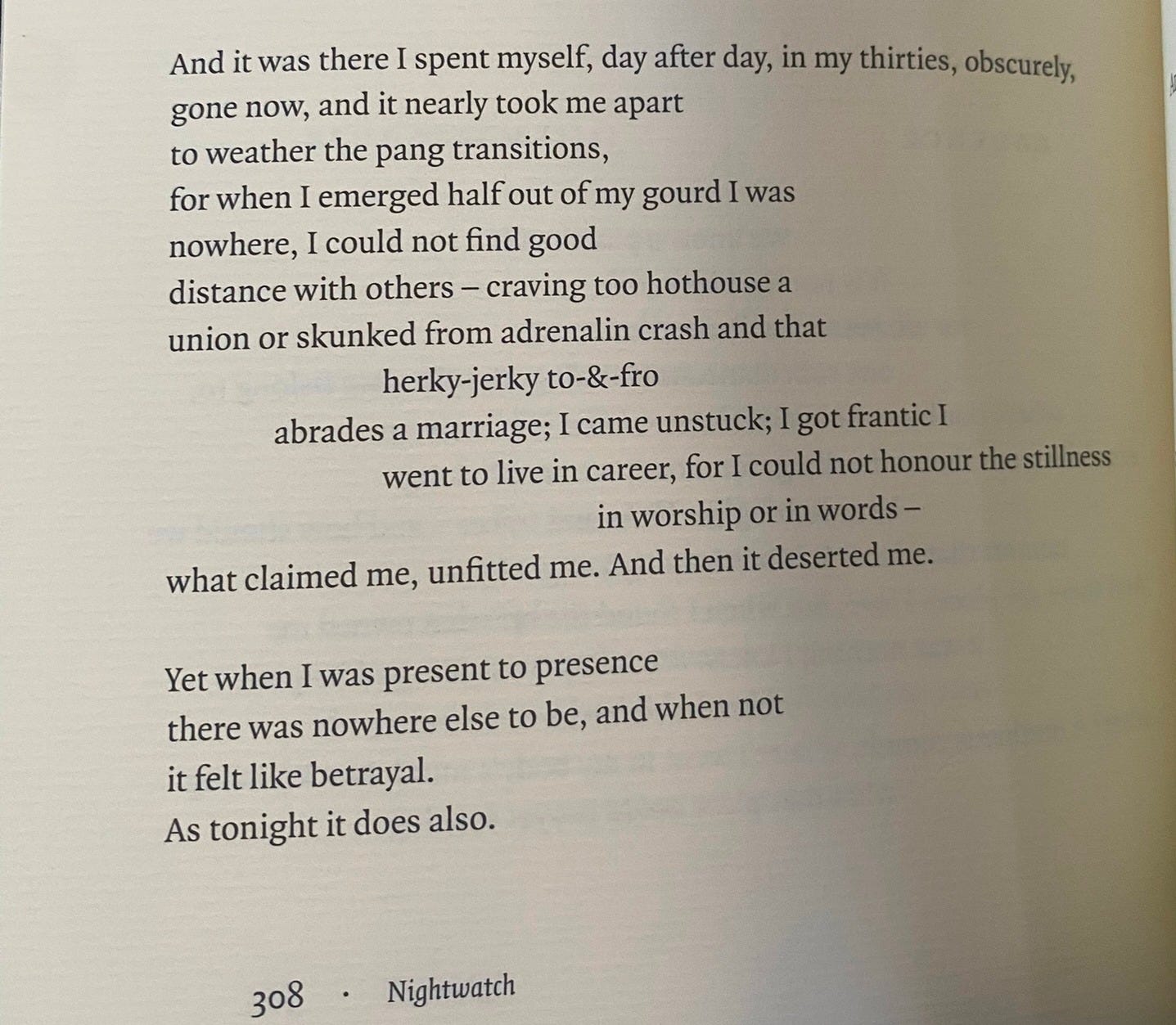
Speaking of Susan Howe, I got a hold of her newest collection, Penitential Cries. The opening eponymous prose poem is remarkable, conveying with great humour the experience of being an elderly, emeritus master of her craft:
Dear Health Care Provider,
I remember not remembering “bat, banana, apple” twice in the fifteen minutes allotted for my once-a-year Medicare Wellness Check. I didn’t see a memory test for octogenarian pariahs coming and yes I admit the fact that I failed this first one is a bad sign but if only you had asked me to repeat “unanswered, perilous, question” after counting down from forty-seven backward in increments of seven.
The majority of the book’s eighty-ish pages are taken up by her signature collages, though they feel a bit slight here and make the book feel so as well. With only twenty-something pages of poems otherwise, PC feels distinctly like a late collection that could have perhaps been a chapbook. That being said, the aforementioned prose poem is worth the price of admission, and I’ll read whatever Howe sees fit to publish at this point and be grateful for it.
Another aging giant that I’ve turned to recently is Dennis Lee. Jim and I have already had the delightful experience of digging out my childhood copy of Alligator Pie (the source of another potential epigraph “I’ve thought about it in my mind–/ Being Five, I mean–/ And why I like it best of all/ Is ‘cause it’s In Between.”) but I had never really paid much attention to Lee’s work for adults, beyond Civil Elegies. I was pleasantly surprised by Heart Residence—it’s expertly constructed (no surprise given Robert Bringhurst’s involvement). To put it extremely casually, he can be a bit of a kooked-up white boy at times, with all the jazz and horniness, and I suspect I might be overly susceptible to some of his more earnest political statements, but he does seem to grasp and consider the spirit of his times, the true task of the poet, in interesting ways: “yet it is/ better to speak in silence than squeak in the gab of the age.”
Richard Siken was another older poet who I got onto (late) after reading Louise Glück’s introduction to his debut collection in American Originality and being taken with her description of his work/the lines she quoted from it. I Do Know Some Things is new territory, as far as I can tell, coming after/in the midst of Siken rebuilding his life post-Stroke. The collection both traces his pursuit of recovery and documents the suffering—both existential and physical—of his being rendered a patient, dependent. What I love most about this one is the way he presents an axiom or fact, only to quickly subvert it: We are the stories we tell ourselves./ I didn’t remember the story, or He said he slept under the table because he grew up with so many brothers. She said he had two brothers, wasn’t my real grandfather, and she didn’t love him. Funny, cutting, instructive. There’s also a wonderful poem about making borscht with his grandmother that includes the line, “We will need to do a lot of chopping and we don’t trust each other with the knives.”
Another of my recent favourites was Patricia Lockwood’s Will There Ever Be Another You. I agreed with the Times reviewer (gasp!) on this one—it’s not her most coherent book, but I don’t really come to Lockwood for coherence. Rather, she has a madcap energy that you won’t find as skillfully rendered anywhere else. I have not laughed out loud while reading very many books (due either to my own humourlessness or poor taste in authors) but I did so at least twice while reading this one, though I won’t say here what sections they were for fear of exposing just how juvenile my sense of humour remains.
Khashayar ‘Kess’ Mohammadi is consistently one of the poets of their/our generation that I am really, truly impressed with, who feels like they are writing (dare I invoke those Scott Griffin-esque terms) at a level that could/would/should/will be recognized on an international scale one day. Their attention to both tradition and the contemporary, their engagement with both Persian history/language/culture as well as their placedness in present-day Toronto, their facility in moving from a high vatic voice, to biting humour, to cogent observation and then delivering each of those tones in a live reading is unmatched. The Book of Interruptions is perhaps my favourite of their books so far (though, some poets, Kess in particular, seem less constrained by the book; Kess is a practitioner of poetry, and the book just happens to be the requisite form). I copied these lines from the opening poem in my notebook:
in the wake of poets
imprisoned in their predestination
the blacksmiths shall die blacksmiths
and the merchants shall birth merchants
Lastly, on the subject of inimitable styles, I recently wrapped up my late summer Shane Neilson trilogy, beginning with the newly Governor General’s award-nominated What to Feel, How to Feel, followed by his latest poetry collection The Reign, and then a re-read of his brilliantly-titled You May Not Take the Sad and Angry Consolations. Shane, perhaps like Kess, is not afraid of the mantle of the poet, he picks up the title and wears it proudly. Perhaps nowhere more than in The Reign, a wild fairytale featuring a romantic encounter between, Willard, an intellectually disabled man and, Casey, who is both an heir to the Irving empire as well as, somehow, a white tailed deer, at a military base in the wilds of New Brunswick, Shane tests the limits of the form. Best to suspend pre-judgement on this one and trust that it is a wild and invigorating ride, and that anyone with as original a vision as Shane brings here is worthy of your time.
And thank you, as ever, for your time here. A Lyric Shame-inspired poem to see you out:
Language Acquisition

Out of his Important Bag

comes every avant-gardist’s dream

a song composed entirely of

the parts of speech I still

cannot reliably identify

grafted to a nursery rhyme melody,

followed by a sheet where they

must deconstruct each character

to its constitutive strokes

taking pains to balance each

wing of the S, tine of the E,

as they put the lead down

trace the dotted lines out

to the end of the sentence.
Yes, "a song composed entirely of
the parts of speech I still
cannot reliably identify"
“but at one point he floated being a hybrid of Queen Elsa and a ruffed grouse.”
I love this, I love the hybrid costume idea but I also love how little kids do really float ideas “I was finking…”