
Talking Talking Books
On Coach House Press's Short-lived Audio Series

This instalment of Work Book is a slight diversion from the usual format. Instead, we have an essay that I’ve been at work on for quite some time concerning a series of cassette tapes released by Coach House Press in the late 1980s and early 90s. The series became somewhat of a fixation for me last summer—my perfect mix of an archives mystery, poetry, and excellent graphic design. Hopefully you’ll find the piece intriguing as well, otherwise, stay tuned for the the usual ramblings, half-reviews, and half-cooked poetry.
I first came to Coach House Press’s Talking Books series as a Michael Ondaatje completist. After being introduced to In the Skin of a Lion in a high school English class, I made my way through the rest of the novels before moving onto his poetry: first McClelland and Stewart’s The Cinnamon Peeler and House of Anansi’s The Collected Works of Billy the Kid, but eventually into the scarcer Coach House titles like Secular Love, Rat Jelly, and The Man With Seven Toes. At one point or another in my collecting, I started seeing the cryptic Previous Canoes listed in bibliographies, seemingly a cassette tape of him reading his poetry, but with very little information available.
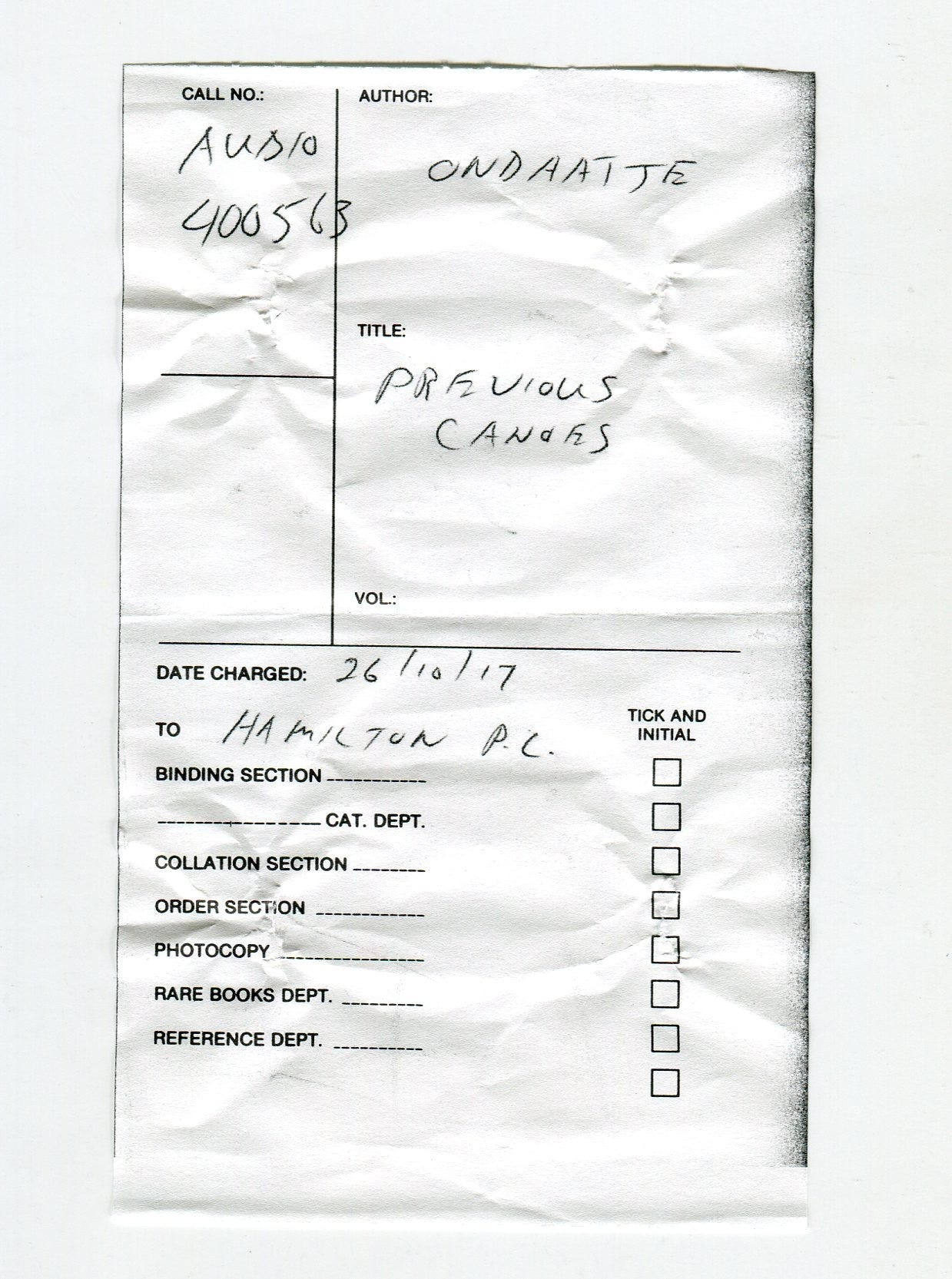
Dutiful librarian that I am, I submitted a request through our Interlibrary Loan department and the cassette arrived a few weeks later from the University of Toronto, one of the few libraries that hold copies. Given how rare these tapes are, I’m astounded now that a librarian just mailed one off for me to perform amateur experiments on in my apartment.
At that time, I was interested in sound engineering, recording myself and my friends playing music on my laptop. We were also experimenting with cassette tapes for that squished 90s sound, so when the Ondaatje tape arrived, I had the means to play it back. I still remember hearing his voice for the first time, cross-legged on my jute rug. Even through my tinny computer speakers, his readings were so sonorous and present, the clipped ds, the short os, crooning the chorus of “How Do you Think I Feel,” calling along with the crows. These poems I had encountered so many times in print—“Dates,” “Burning Hills,” “Elimination Dance”—were renewed in his delivery. I can hear that opening title and dedication ringing out in his beautiful, patient cadence, “Light…for Doris Gratien.”
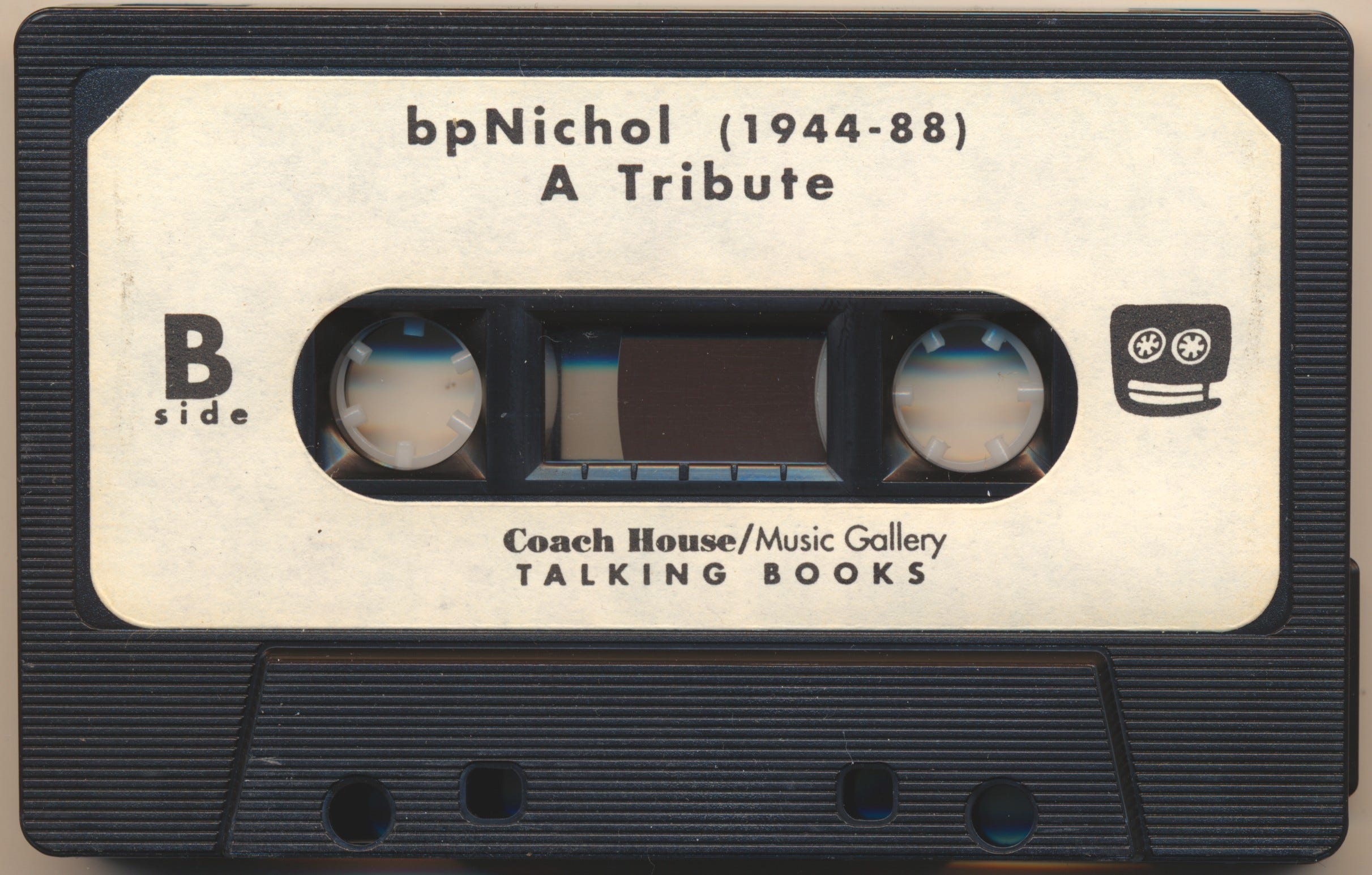
Knowing I would only have access to the tape for a few weeks and having a sense that I’d stumbled on something of a rarity, I ran a cable from the headphone jack of my tape deck into the port of my audio interface and made a rough digital version of the cassette which I uploaded to YouTube in 2017. In the years that followed, someone would periodically comment on the video and I’d be reminded of the recording, prompted to revisit it myself.
It wasn’t until the winter of 2025 when the poet Kevin Stebner posted a photo of Hamilton hero David McFadden’s contribution to the series that I gave any thought to the rest of the Talking Books. When I first started looking for more information, the tapes seemed to have more or less vanished into the internet’s maw. So many of the websites that document these types of projects are medium-exclusive; there’s no option for audio on Abebooks, and though there are scattered entries for literary releases on Discogs, given the site’s musical leanings, these kinds of projects don’t really register—too musical for the literary people, too literary for the music people. One bookseller I contacted made the distinction quite succinctly, “Unfortunately we don’t deal with cassettes or audiobooks, just print books.”
~
Ever since Robert Browning had his bungled version of “How They Brought the Good News from Ghent to Aix” committed to wax cylinder in 1889, poetry has become available in a host of audio formats. Many of the famous Modernists could be heard on LP (and eventually cassette) through labels like Harper Collins’s Caedmon. Likewise, influential American poets of the postwar era like Ginsberg, Waldman, Harjo, Lorde, Snyder and Rich were recorded for cassettes by Watershed Tapes.
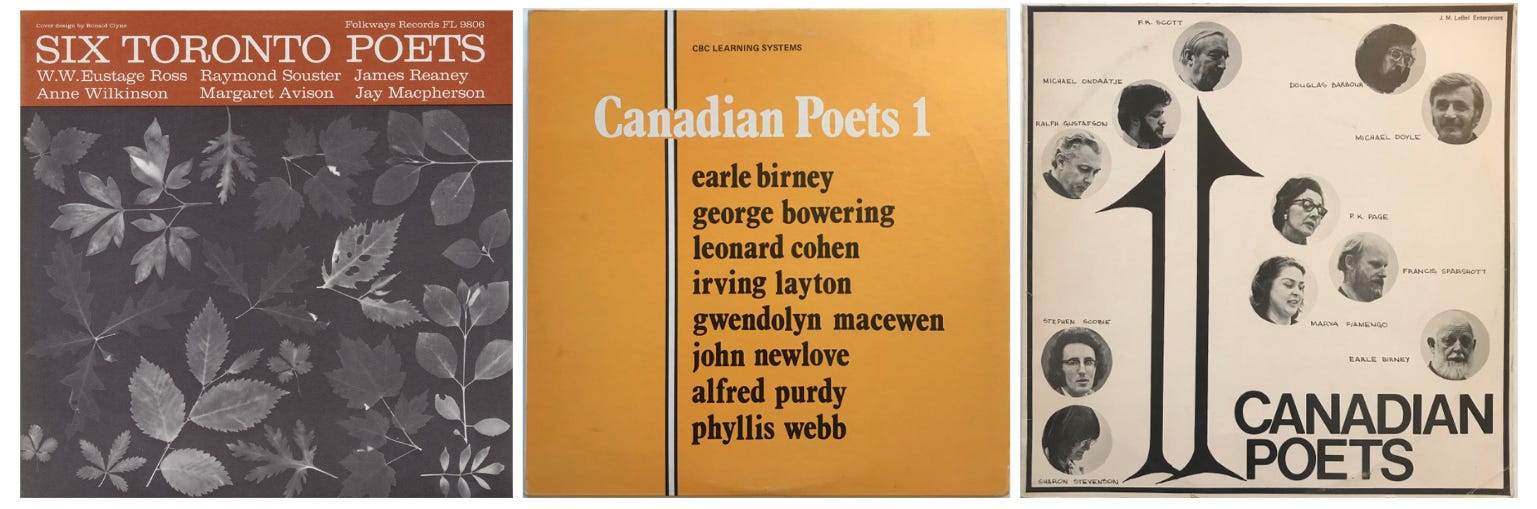
The history of recorded Canadian poetry is quite a bit shorter (case in point, the Canadian Poetry Audio Archives contains just 49 recordings, 25 in English). I would be remiss not to mention the Underwhich Audiographic Series whose cassettes have been lovingly documented by Siren Recordings. But as for more traditional commercial releases, the most prominent are a handful of numerically-oriented LPs: Six Montreal Poets (Folkways Records, 1957—later reissued on cassette), Six Toronto Poets (Folkways, 1958), Canadian Poets 1 (CBC, 1966), Canadian Poets 2 (CBC, 1969), and 11 Canadian Poets (League of Canadian Poets, 1973). These LPs were followed by the delightfully oxymoronic Famous Canadian Poets on CD (Canadian Poetry Association, 1999), which was puzzlingly supplemented by a cassette from Milton Acorn. Each of these releases does a fair amount of reproduction with figures like Earle Birney and F.R. Scott appearing in three out of the four projects, and in what feels like an analogy for Canadian Literature as a whole, both sides of Canadian Poets 2 are devoted entirely to Margaret Atwood’s The Journals of Susanna Moodie.
Though these series all predate the Coach House Press Talking Books, many significantly so, they are without exception much easier to access information on, if not the actual recordings (the Folkways pressing still available for purchase through their webstore). Perhaps the relative disappearance of the Talking Books was an issue of edition size or the tendency of cassette tapes to decay faster than vinyl. It almost certainly involves the brief demise of Coach House Press in 1996 before it was reborn as Coach House Books in 1997, a transfer that resulted in the loss of many in-house records.
Whatever the combination of factors that contributed to its obscurity, the series’ scarcity meant that my search for information was haphazard. I found a few scant listings on Discogs for the Victor Coleman and Michael Ondaatje tapes, including a pixelated reproduction of one of the J-cards from which I was eventually able to piece together the full series catalog.
Once I had the complete list of titles, I was able to find the cover image for Robert Priest’s perfectly titled Rottweiler Pacifist via the Instagram account of the series’ designer Kurt Swinghammer. When I emailed Kurt to see if he had more information, he said he hadn’t archived his work from that era well:
Interesting to see these - I’d completely forgotten about many of them. The unusual aspect of this project was that the covers weren’t printed at Coach House and I was responsible for delivering them. I used a dude who did Queen West posters and some of the designs suffered in the translation…Long forgotten the name of the printer. It was a very small operation just north of Queen, west of Bathurst.
Of course, jwcurry had the bpNichol entries (including EAR LICK) meticulously documented on his voluminous Flickr account. Other online bibliographies, like the University of Toronto’s Canadian Poetry Online, captured the entries of individual authors in the series, but I struggled to find anything comprehensive that addressed the series as a whole.
Eventually, I was able to purchase a copy of the David McFadden tape through Toronto’s David Mason Books. When I reached out to the all-knowing James McDonald of The Printed Word, he said he had the Anne Michaels cassette “at home but not among my personal must keep things.” I placed an order for the bpNichol cassette with another bookseller and anxiously re-read the last line of their confirmation email during the tape’s month-long journey to my door: “please wait for notification from us before sending payment…in the event that an item cannot be located in our stacks.”
A review of the Gwendolyn MacEwen tape in Brazen Oralities was available on archive.org, as well as a two-part review of the entire series in back issues of The Malahat Review. While scattered and spare bibliographic information appeared via the catalogues of various university libraries and special collections, the only complete collection (from what I can find) is held by Library and Archives Canada (though not all entries are linked to the “Talking Books.” series, necessitating some creative searching).
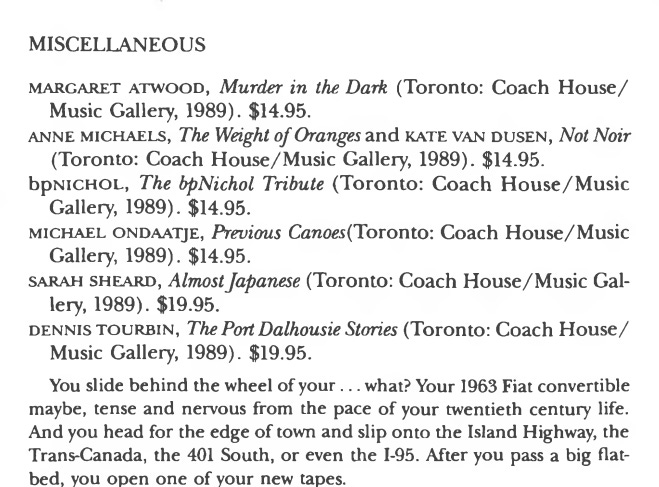
I’ve divulged my browsing history here not because I believe I have exceptional research skills, but rather to highlight how certain information eludes archiving, particularly in an online context. Each of these websites, collectors, publications, libraries etc. is doing important and admirable work in documenting and preserving the history of Canadian literature, but given their particular focuses, while pieces of the series have been collected, the series as a whole has almost entirely been neglected.
That is, until a part-time archive worker/poet rectified past omissions with one rambling essay to unite them all. So, here’s what I’ve learned:
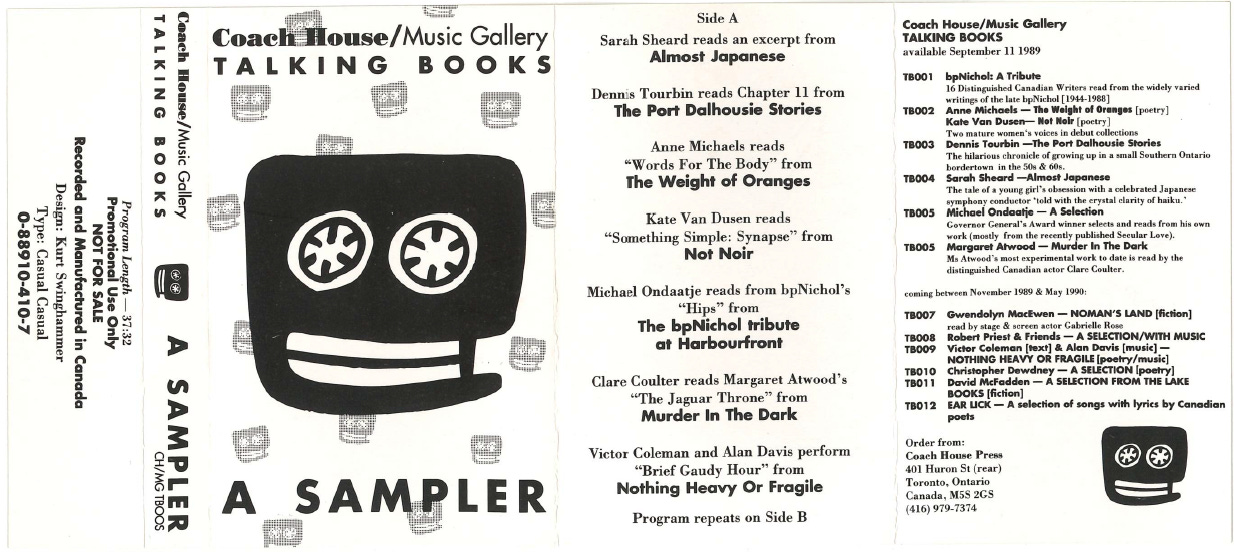
The series was preceded by a promotional sampler in 1988 featuring recordings from the Sarah Sheard, Dennis Tourbin, Anne Michaels, Kate Van Dusen, bpNichol, Margaret Atwood and Victor Coleman tapes. Over the course of 1989 and 1990, thirteen cassette tapes were released [doesn’t that scream special project grant funding?]. The series was a collaboration between legendary Toronto music venue/recording studio, The Music Gallery, and Coach House Press. Each of the tapes was produced by Victor Coleman who was a double agent for both Coach House and The Music Gallery at the time. Paul Hodge handled various technical aspects of the recording/editing process and Kurt Swinghammer handled the design of the packaging. In very fitting small press fashion, the series does not have a clear first, sixth or eleventh entry but rather two 002s, two 005s, and two 008s.
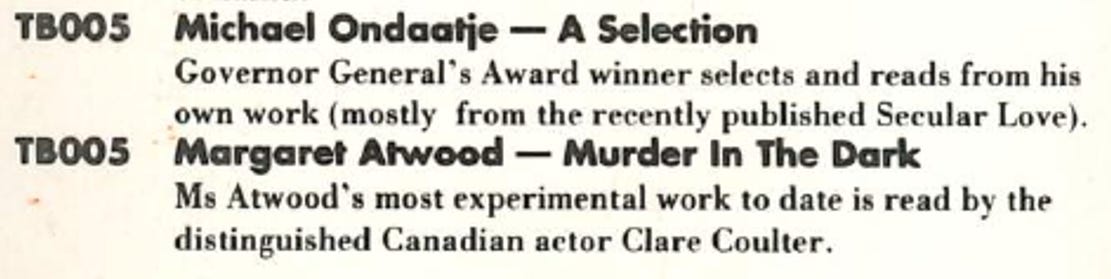
The cassettes were released in two batches with the first six appearing on September 11th, 1989, followed by the final seven between November 1989 and May 1990, an almost even mix of poetry and prose. Each tape came sheathed in a silver box, like a prosthesis that rendered them book-sized. The first instalments are mostly single author recordings whereas some of the 1990 selections are more ambitious, including musical accompaniment. Some were new selections of work recorded by the authors themselves, whereas others were recordings of standalone works. In a few cases, where the author had recently passed away (or was too famous?) the readings were done by local actors.
While the internet might seem to hold all, there are interesting and important histories disappearing. A series that included some of the biggest writers of its day (and our day) is now virtually unsearchable, largely SEOed out by Coach House’s own website, social media, and Wikipedia page, etc.
The Talking Books series is one of the only collections of formal studio recordings of Canadian writers, particularly this generation of Torontonian/Canadian authors. Among recordings of Canadian literature, it seems to be unique in its focus on full works and/or broad selections of individual authors. It is also just one example of many projects that had not made the transition from analog to digital. Luckily, the tapes were sourceable and many of the original contributors were willing to share what they remembered after little more than a cold email.
This is a beautiful and unique set of recordings, an impressive feat of collaboration between some of this country’s finest novelists, actors, poets, musicians, audio engineers, and visual artists. The information is out there, but for how much longer? The links are rotting, the poets are passing, the tape is decaying.
~
Series Catalogue
CH/MG TB000 - A Sampler (1988)
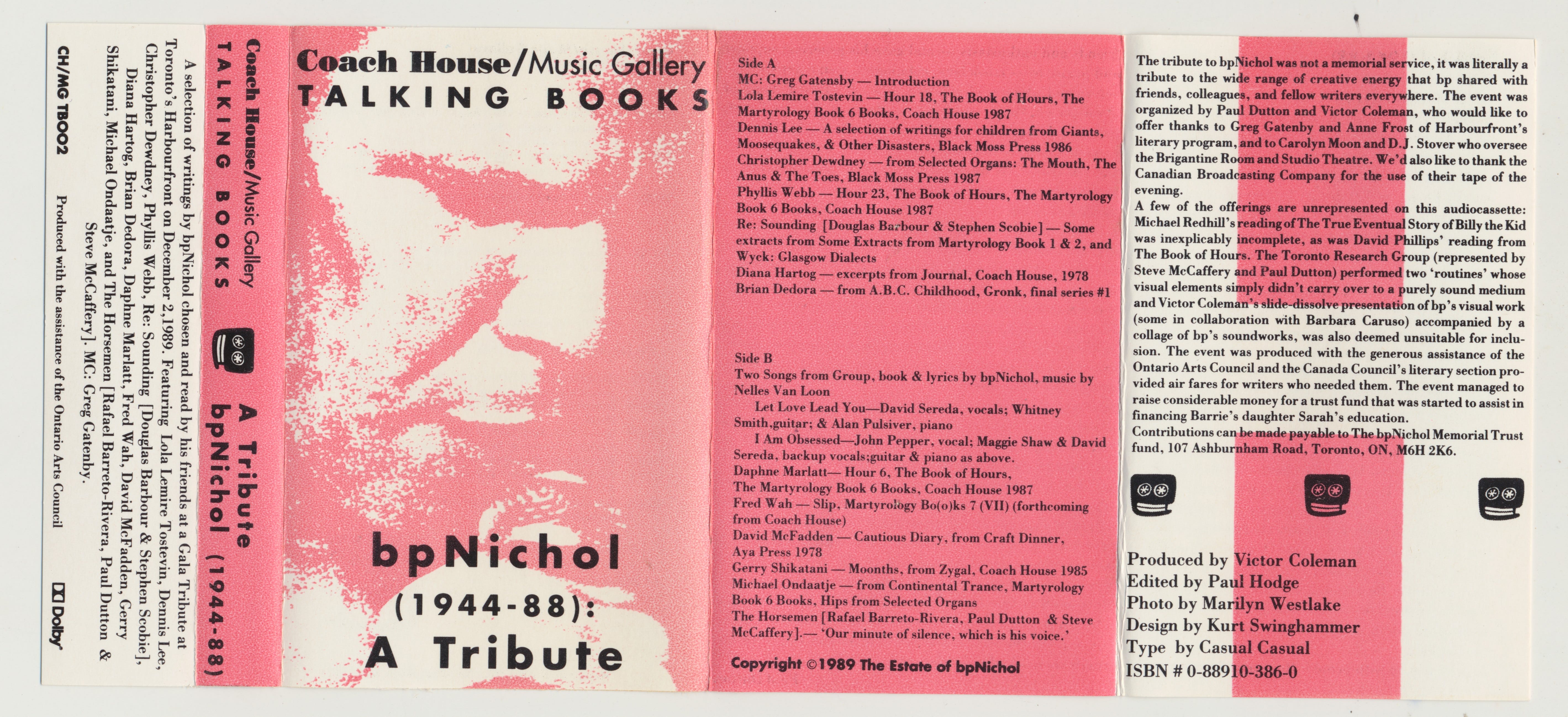
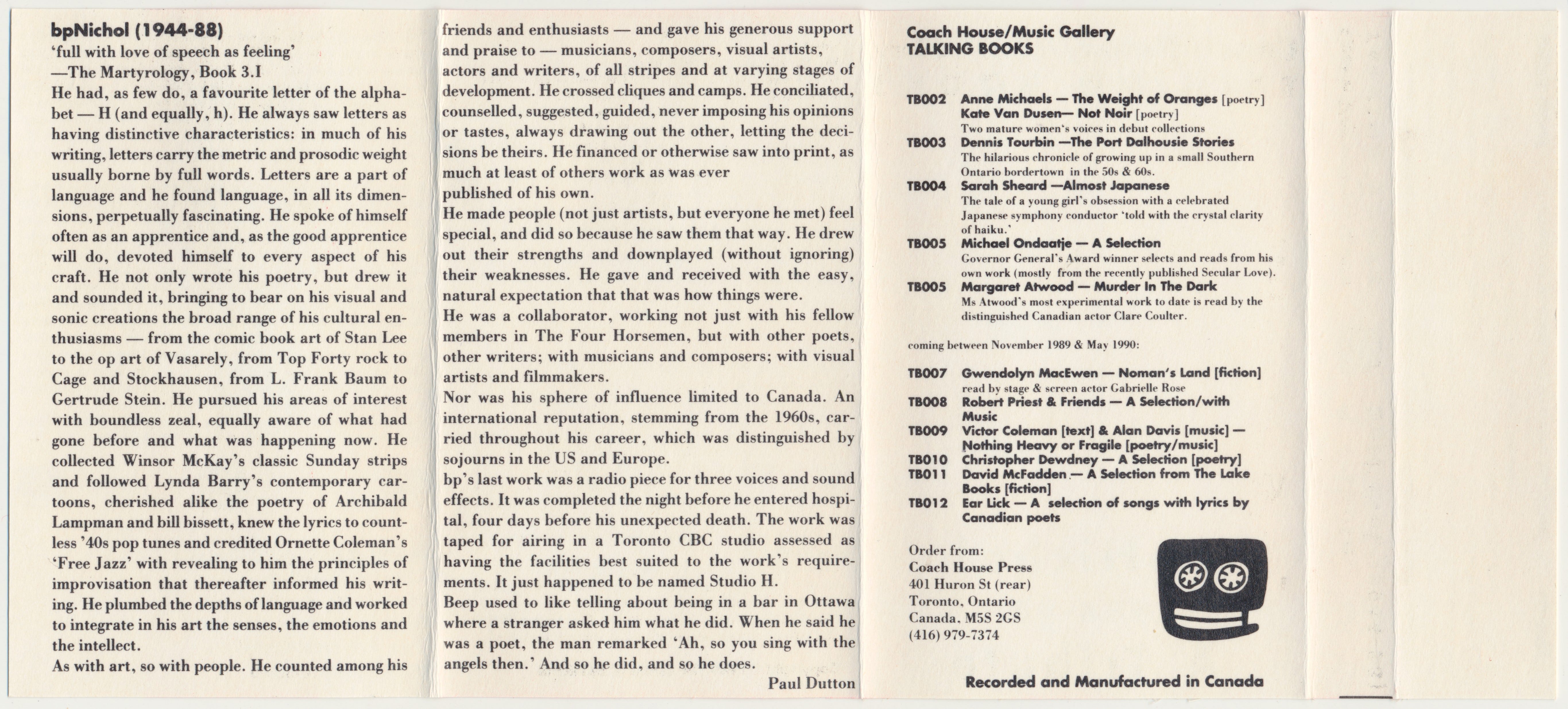
CH/MG TB001 - bpNichol (1944-88) - A Tribute (1989) [#002 on packaging]
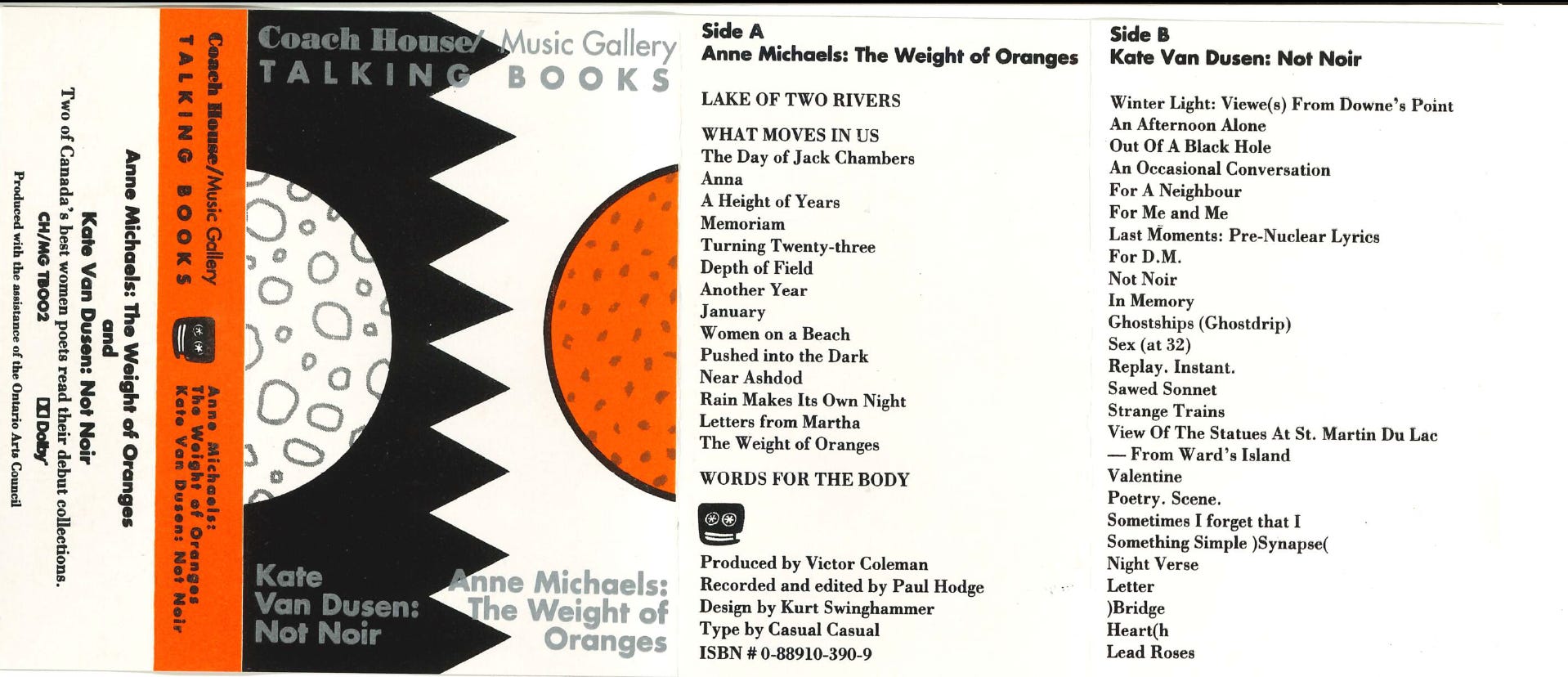
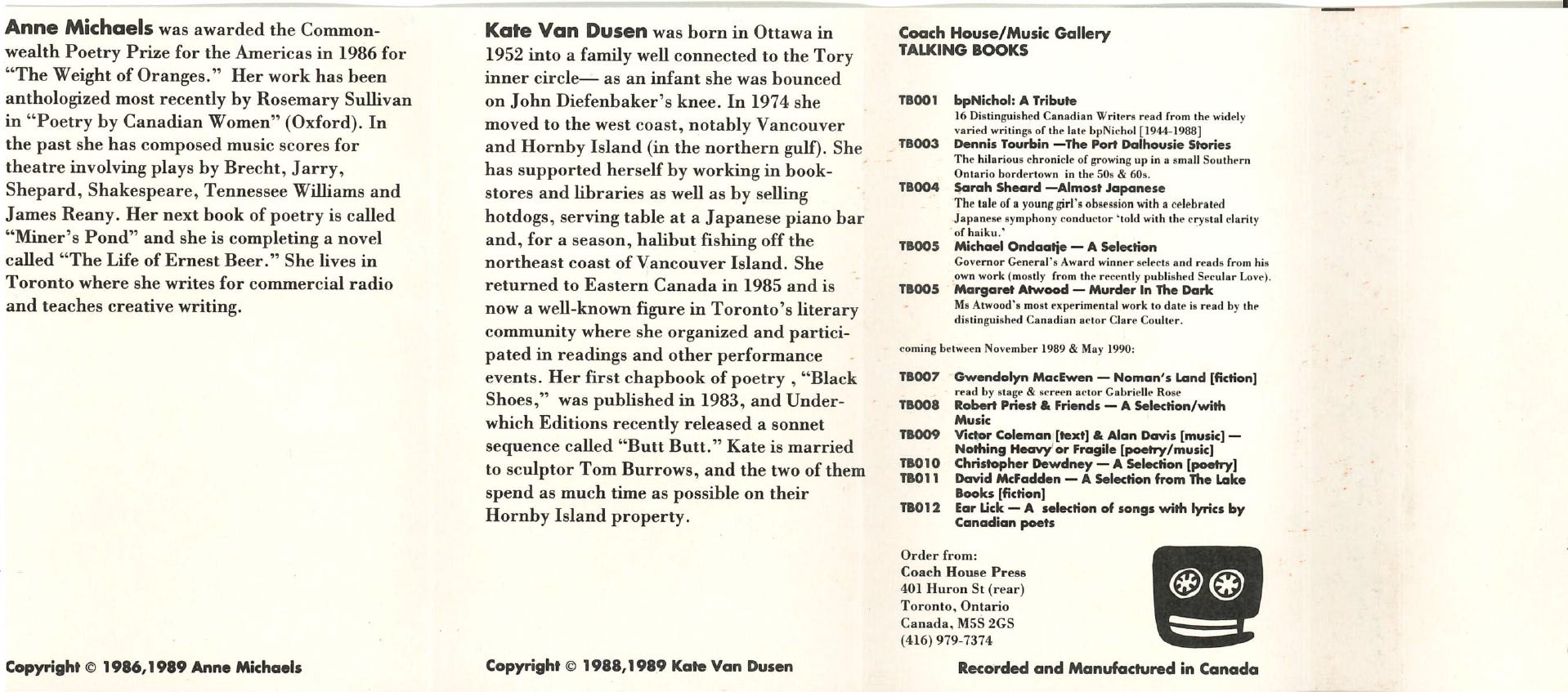
CH/MG TB002 - Anne Michaels / Kate Van Dusen - The Weight of Oranges / Not Noir (1989)
CH/MG TB003 - Dennis Tourbin - The Port Dalhousie Stories (1989)


CH/MG TB004 - Sarah Sheard - Almost Japanese (1989)


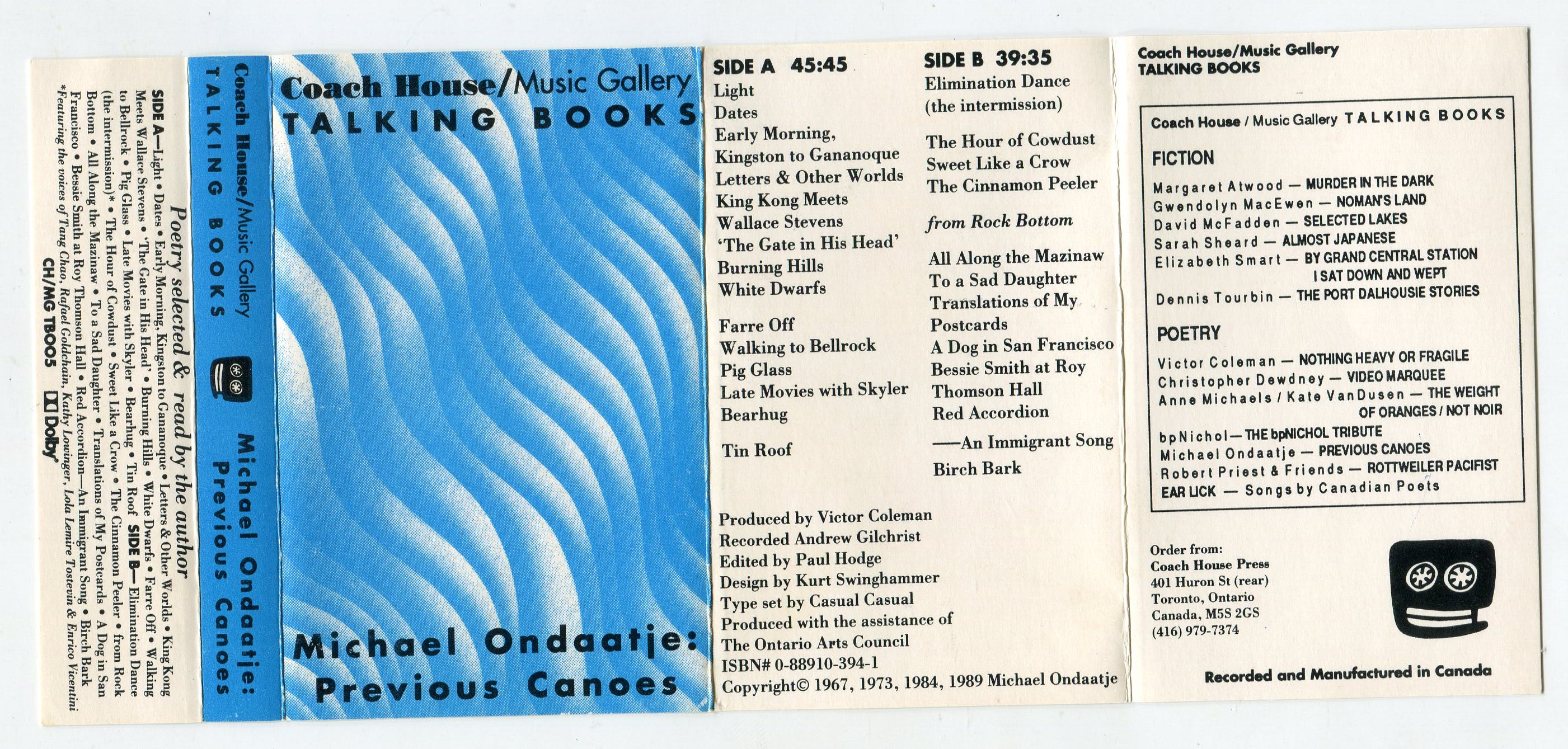
CH/MG TB005 - Michael Ondaatje - Previous Canoes (1989)
CH/MG TB006 - Margaret Atwood - Murder in the Dark (1989) [read by Clare Coulter]
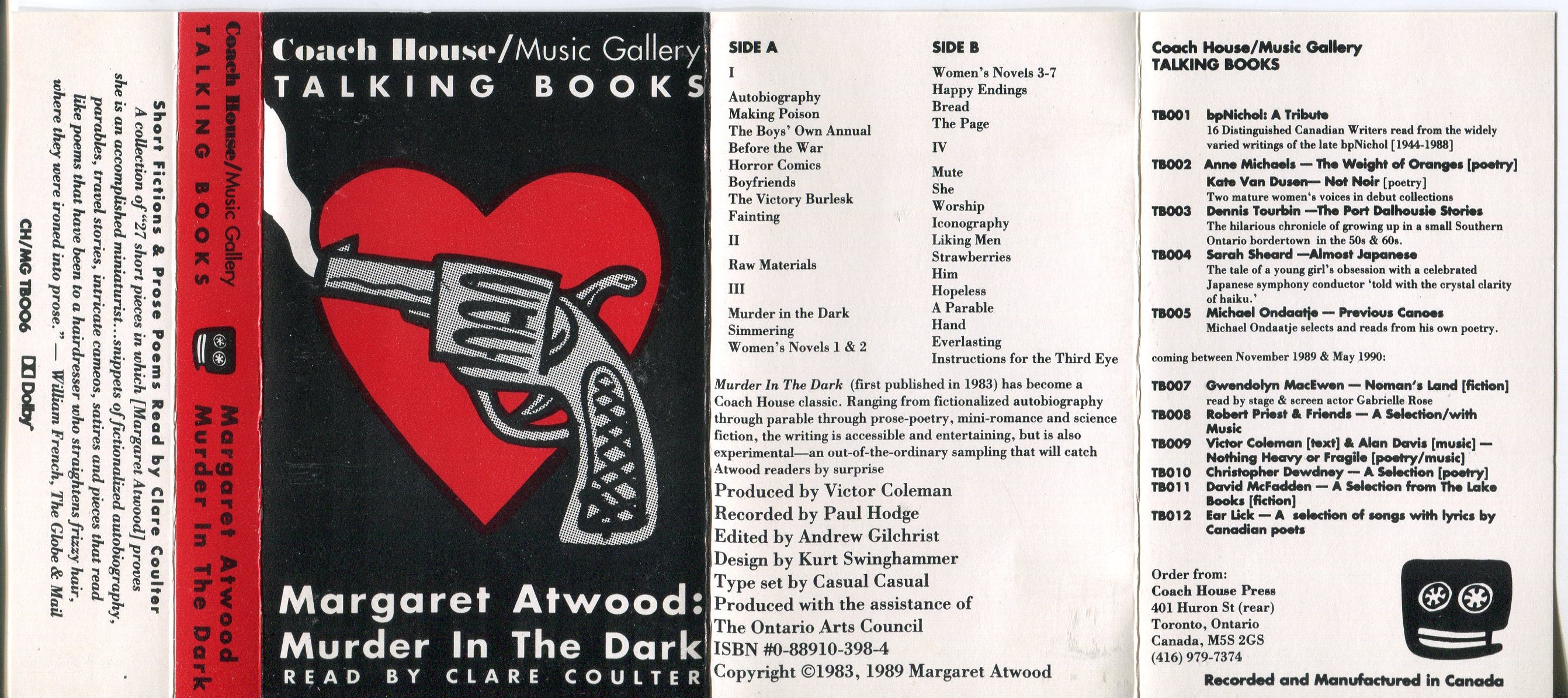
CH/MG TB007 - Gwendolyn MacEwen - Noman’s Land (1990) [read by Gabrielle Rose]
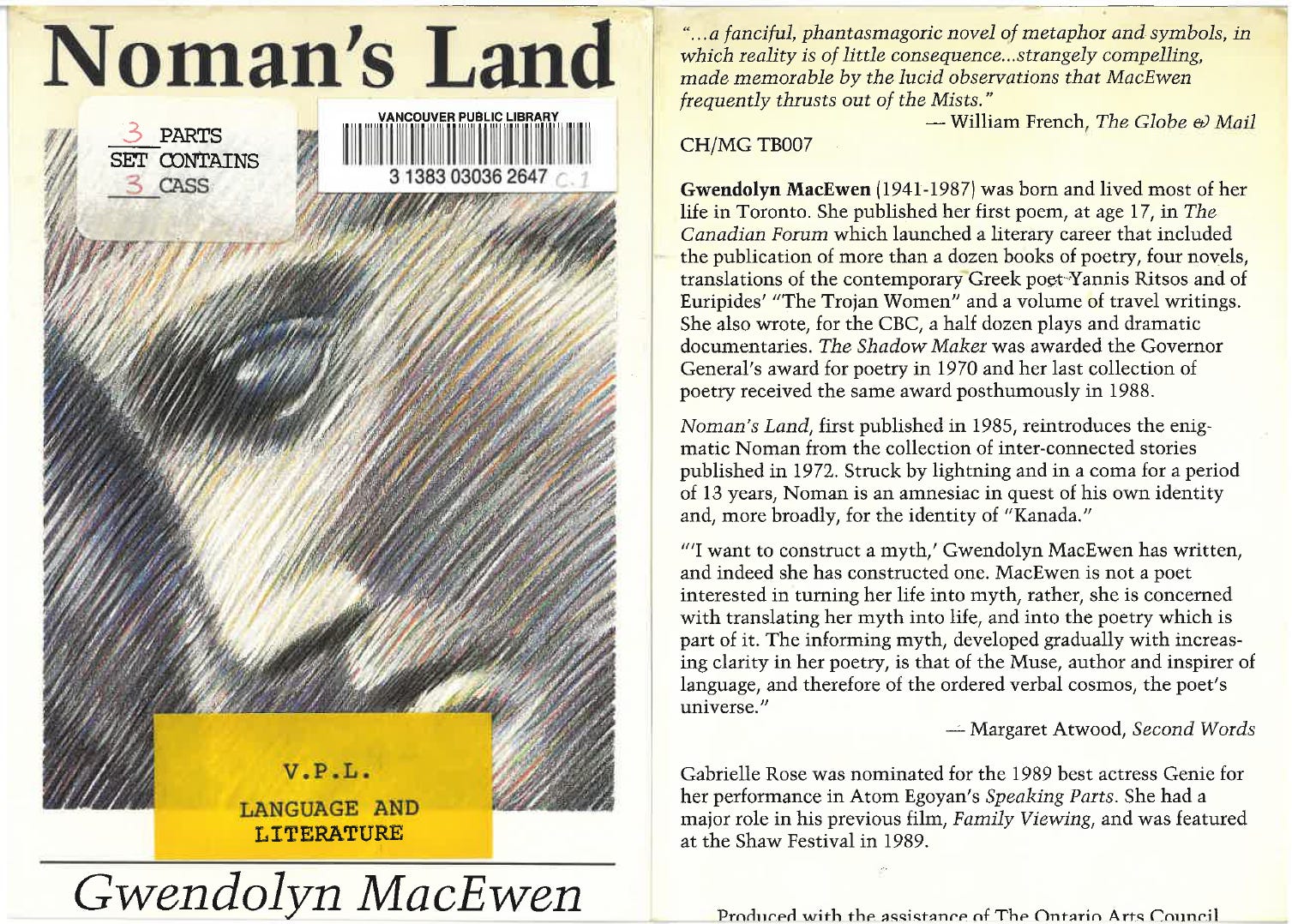
CH/MG TB008 - Robert Priest - Rottweiler Pacifist (1990)
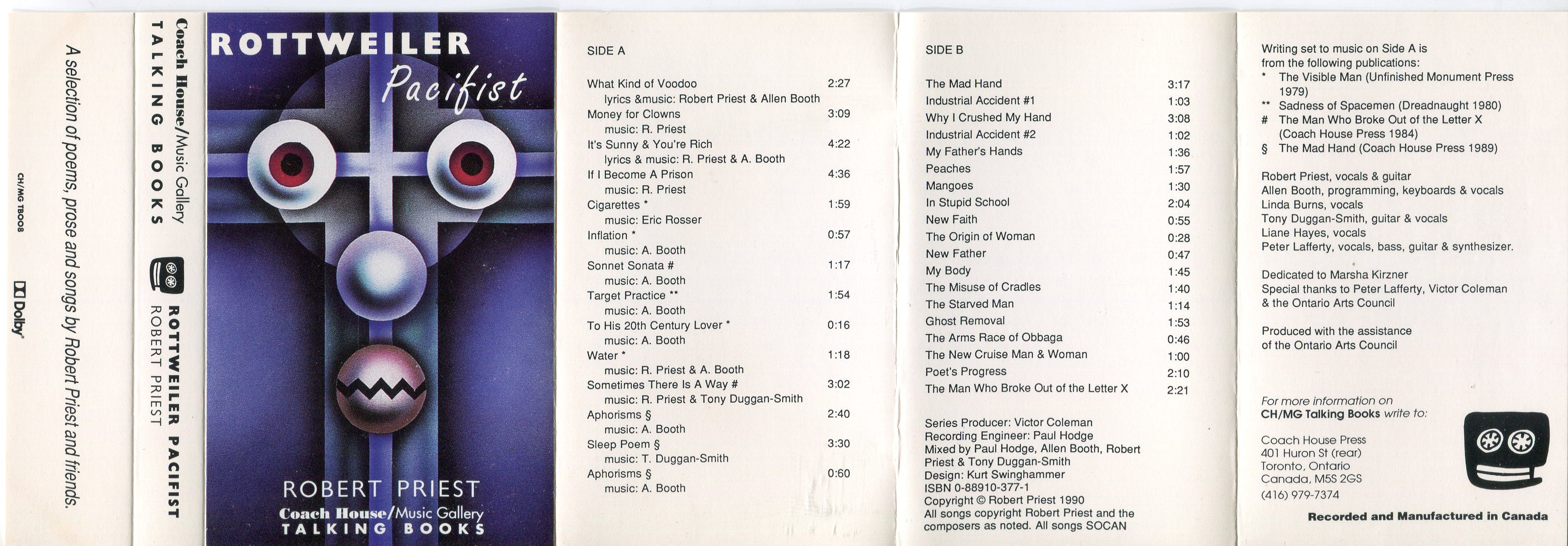
CH/MG TB009 - Victor Coleman - Nothing Heavy Or Fragile (1990)
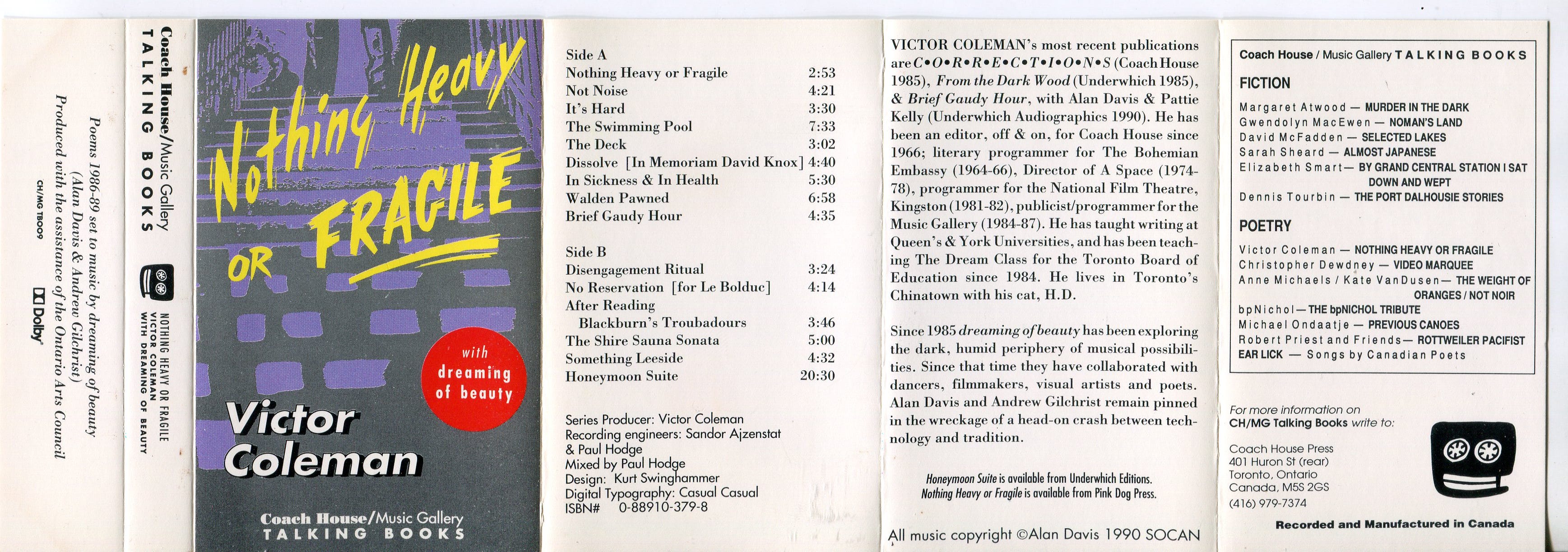
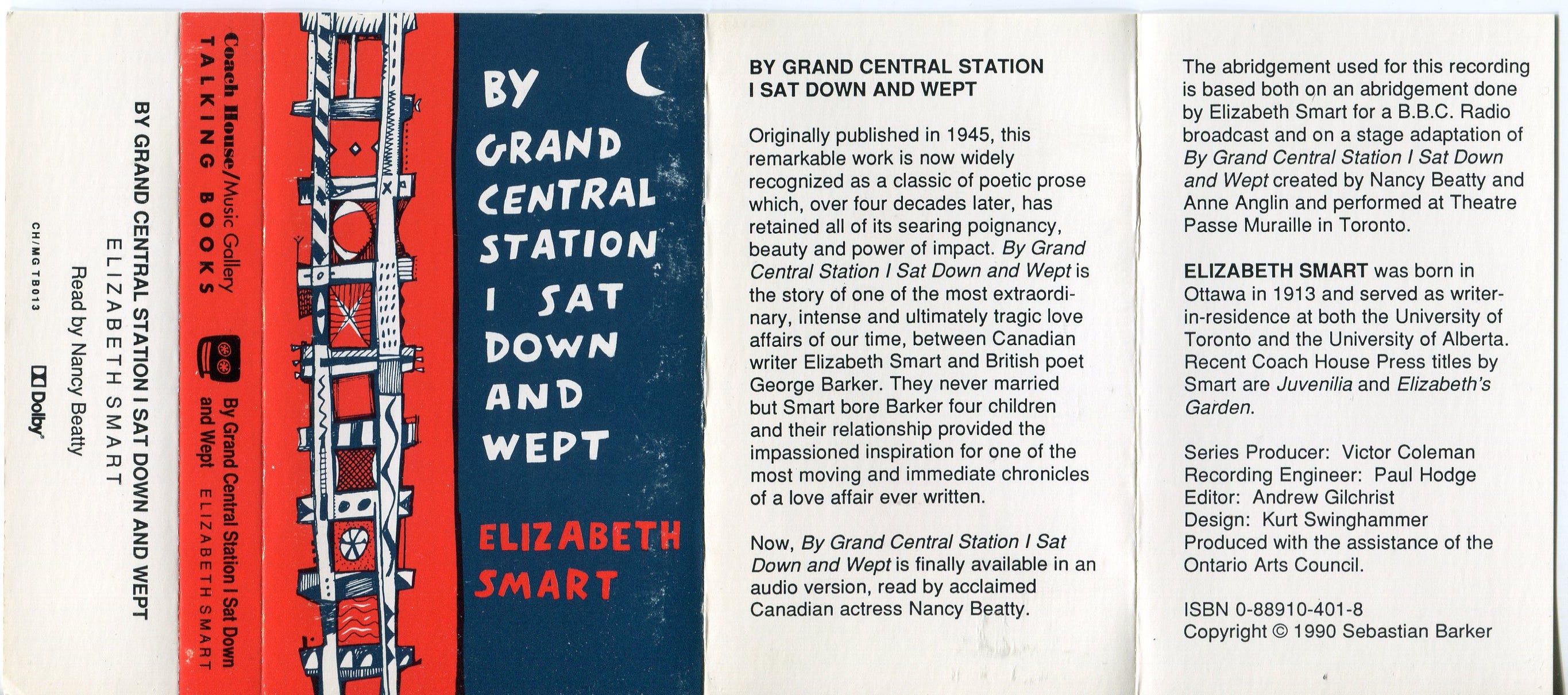
CH/MG TB010 - Christopher Dewdney - Video Marquee (1990)
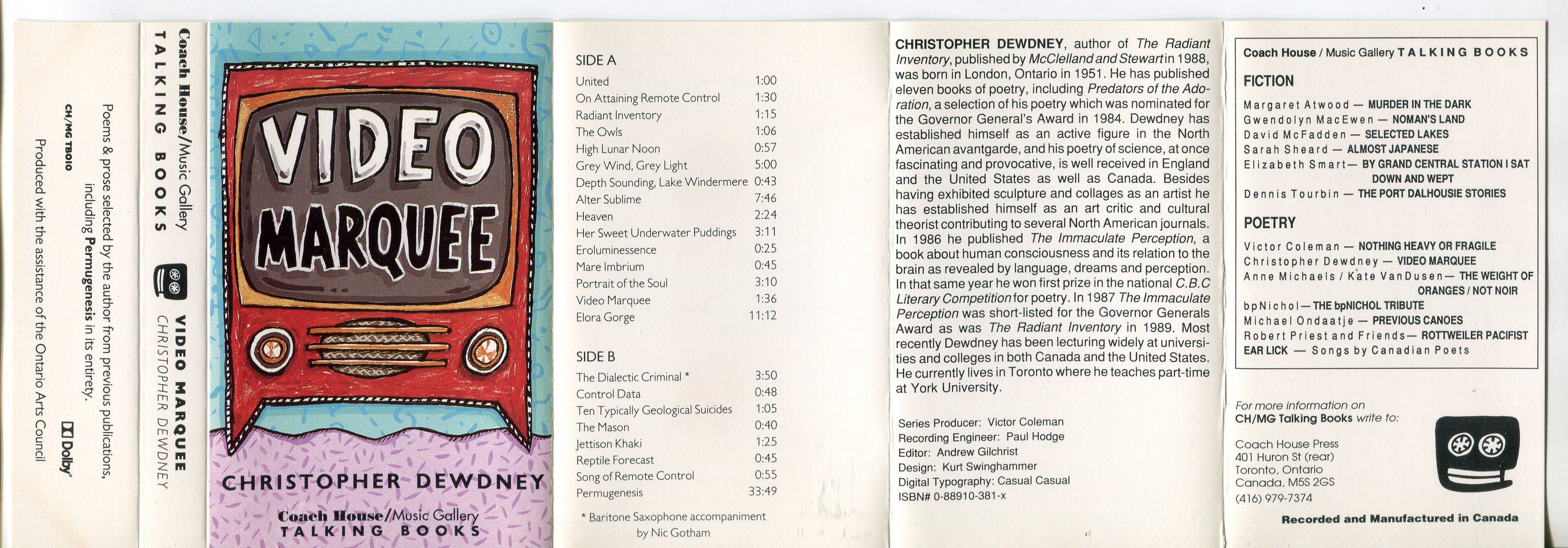
CH/MG TB011 - David McFadden - Selected Lakes (1990) [#008 on packaging]
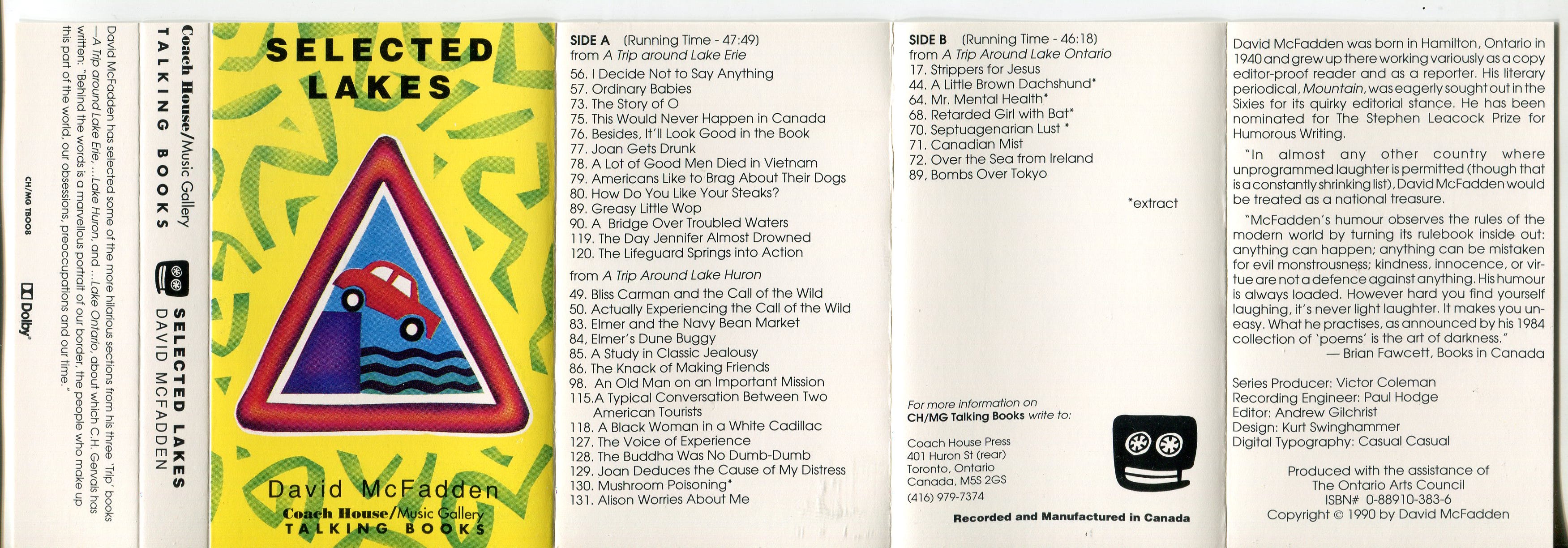
CH/MG TB012 - EAR LICK - Poets as Songwriters (1990)
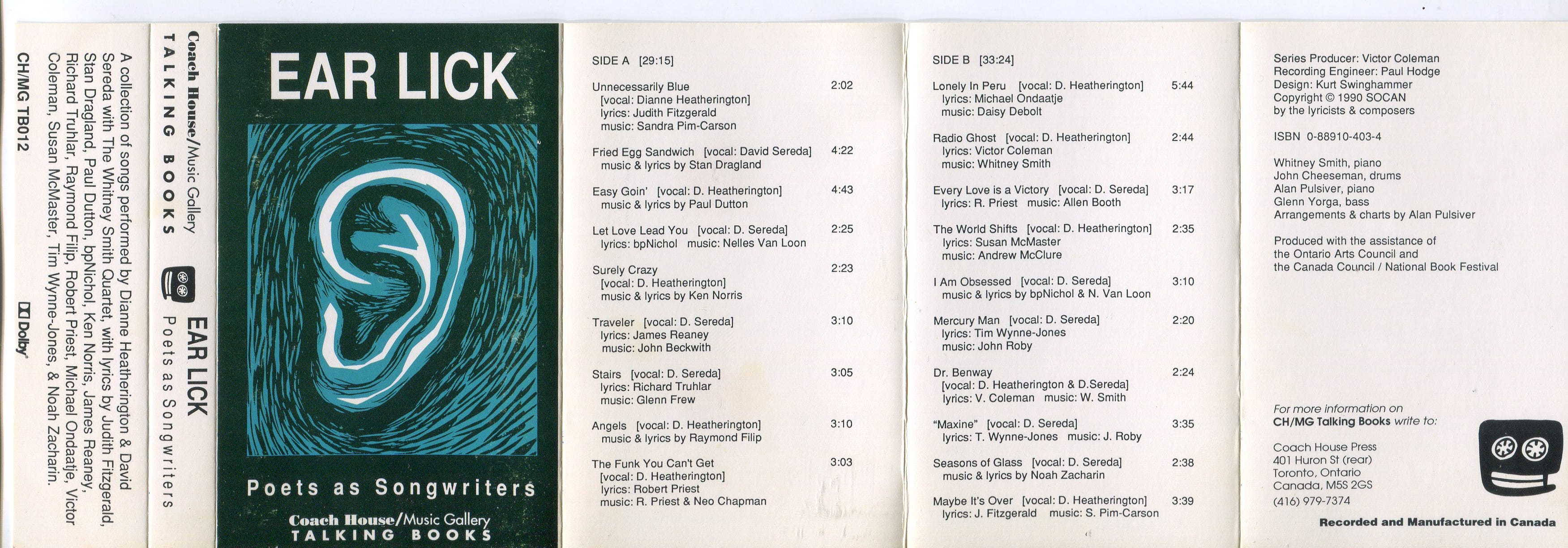
CH/MG TB013 - Elizabeth Smart - By Grand Central Station I Sat Down and Wept (1990) [read by Nancy Beatty]
A Selected Audiography(?) of Canadian Poetry
Six Montreal Poets [Folkways, LP & Cassette, 1957]
Six Toronto Poets [Folkways, LP, 1958]
Voix de 8 Poetes du Canada [Folkways, LP, 1958]
Canadian Poets 1 [CBC, LP, 1966]:
Canadian Poets 2 [CBC, LP, 1969]
Poems for Voices [Radio Canada International, LP, n.d./1970]
Al Purdy’s Ontario [CBC, LP, 1971]
Alden Nowlan’s Maritimes [CBC, LP, 1972]
Gwendolyn MacEwen - Open Secret [CBC, LP, 1972]
Louis Dudek - The Green Beyond [CBC, LP, 1973]
11 Canadian Poets [League of Canadian Poets, LP, 1973]
Newfoundland Poets Volume 1 [Pigeon Inlet Productions, LP, 1982]
Canadian Poetry Association Audio Series [CD, 1999, + Milton Acorn cassette, 1986]:
With thanks to:
Kurt Swinghammer, Paul Hodge, Tess Visser, Steacy Easton, James McDonald, Samantha Dawdy at McMaster University Libraries, Monique Flaccavento and Dylan Rykse at Robarts Library, Jaspreet Sandhu at the Ontario Arts Council, Anna and Julia at the Clara Thomas Archives & Special Collections, LT at the Vancouver Public Library, David Kloepfer at Simon Fraser University’s Special Collections & Rare Books, Adrienne Connelly at the Art Gallery of Ontario, Kristen Frame at Library and Archives Canada, and the University of Calgary’s Interlibrary Loan Department.
Great read!